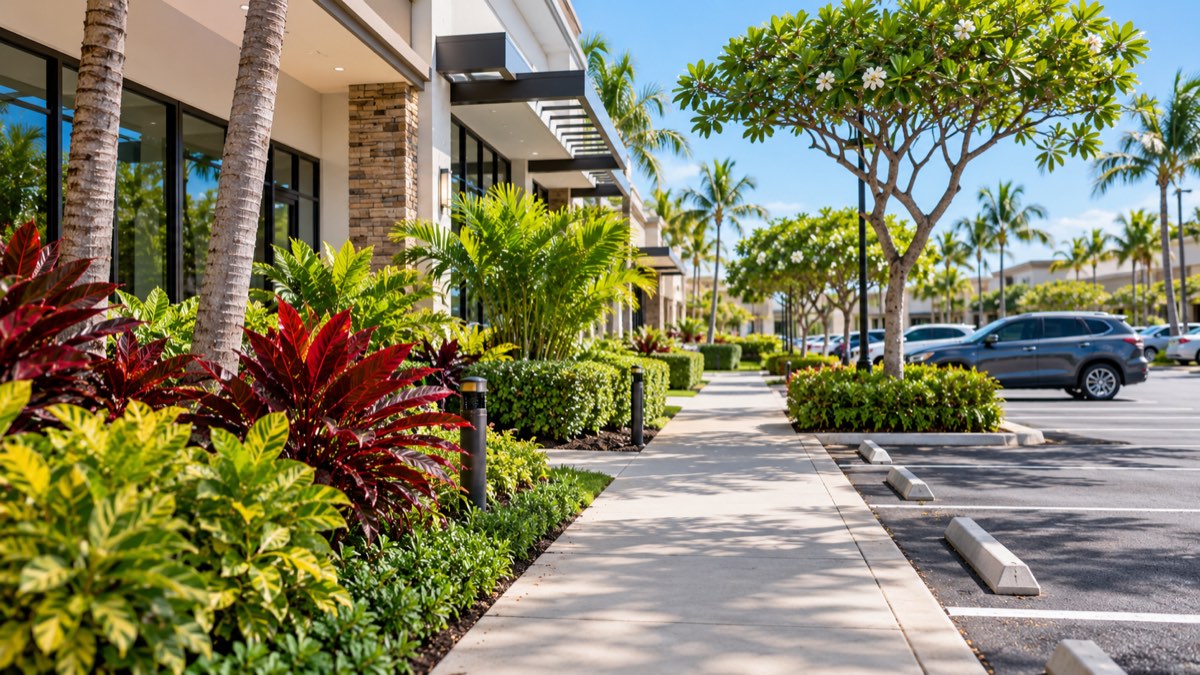
A neatly maintained commercial landscape should complement the property without interfering with how people move through it. Overgrown shrubs near a parking-lot entrance can reduce visibility, irrigation overspray can leave walkways wet during operating hours, and fallen palm fronds may obstruct routes that tenants, customers, and maintenance teams use every day.
These issues are especially important for Oahu commercial properties, where tropical plants can grow throughout the year and landscape conditions vary by location. At Pacific Island Landscape, we provide commercial landscape maintenance for retail centers, office properties, and other managed commercial sites across Oahu. Our maintenance programs address planting areas alongside the hardscape spaces that surround them.
For property managers, understanding what to inspect and how to define maintenance responsibilities can help prevent recurring problems.
Why Parking Lots and Walkways Need Landscape Attention
Commercial landscaping is often evaluated by the condition of its lawns, trees, and planting beds. However, the way plants interact with nearby paved areas is just as important. At a retail center, for example, hedges lining a parking lot may gradually grow beyond their intended boundaries, interfering with visibility around vehicle entrances or pedestrian crossings.
Similarly, plants extending into walkways can reduce usable walking space. These conditions may develop gradually, making them less noticeable during a quick inspection. A commercial landscape maintenance plan should therefore consider both the appearance of planting areas and how those areas affect the surrounding property.
Three areas deserve particular attention:
- Parking-lot visibility: Shrubs and low tree branches near intersections, drive aisles, and pedestrian crossings should be reviewed wherever they may interfere with visibility. Selective pruning or changes to the planting arrangement may address specific concerns without removing mature plants unnecessarily.
- Pedestrian access: Overhanging branches, encroaching groundcover, and accumulated landscape debris can interfere with routes connecting parking areas, entrances, and shared commercial spaces. Routine maintenance should identify growth extending beyond agreed boundaries.
- Property entrances: Overgrown hedges can obstruct directional signs or conceal architectural features. Landscape maintenance should support the entrance's intended appearance, with clear instructions for maintaining plant height and shape.
Where visibility or access requirements are governed by an approved site plan or applicable regulations, those requirements should guide the work.
6 Commercial Landscape Problems Property Managers Should Watch For
A property walk provides an opportunity to identify landscape conditions that might otherwise be overlooked between maintenance visits. The following problems are particularly relevant around parking lots, building entrances, and pedestrian routes.
1. Hedges Blocking Signs or Sightlines
Hedges provide screening and structure, but their size needs to match their location. When shrubs become overgrown near parking-lot exits, directional signs, or vehicle intersections, they may interfere with visibility. Property managers should identify the affected areas and document appropriate pruning limits rather than relying on general instructions to trim everything.
2. Tree Branches Extending Over Parking Spaces
Mature trees can provide shade and help define outdoor spaces, but low branches, visibly damaged limbs, or other canopy concerns may require closer attention. Routine pruning may address certain growth issues, while larger or potentially hazardous tree work requires an appropriate assessment and approved scope.
Our commercial tree trimming and canopy management services can be considered when the work extends beyond ordinary planting maintenance.
3. Irrigation Spraying Onto Pavement
Sprinkler heads that are misaligned may direct water toward sidewalks, parked vehicles, or building entrances. This can indicate that adjustments are needed or that the irrigation layout no longer matches the surrounding planting. Before changing watering schedules, it is important to review which areas receive water and whether the plants are being irrigated appropriately.
4. Landscape Debris Accumulating Near Walkways
Palm fronds, leaves, branches, and pruning debris can accumulate around entrances and parking areas. Some material results from normal plant growth, while larger debris may follow weather events or additional landscape work. An ongoing maintenance agreement should explain who removes routine service-generated debris and whether existing piles or materials requiring special handling need a separate removal scope.
5. Groundcover Growing Across Pathways
Groundcover and low-growing plants can soften the appearance of paved spaces, but they may gradually extend over adjacent walkways. Regular edging and pruning help maintain clear planting boundaries while preserving the intended landscape design.
6. Planting Beds With Persistent Water Problems
A planting bed that remains unusually wet may indicate excessive irrigation, a leak, or an underlying drainage concern. These problems should be investigated rather than repeatedly addressed through trimming or plant replacement alone. If the issue involves drainage design or work affecting nearby structures, additional qualified professionals may be required.
What Should Commercial Landscape Maintenance Include?
A maintenance agreement should define responsibilities for both living landscape material and adjacent hardscape areas. At Pacific Island Landscape, our commercial maintenance services are based on property-specific scopes of work that identify the services required at each site.
Our standard commercial maintenance offering includes turf management, pruning and plant care, irrigation auditing, weed and pest control, hardscape clearing, and green-waste removal generated by contracted maintenance work. For properties with parking lots and pedestrian routes, the agreement should clearly explain how these responsibilities apply to specific areas.
Not every property requires the same maintenance frequency. A busy retail entrance may need more frequent attention than a lightly used landscaped perimeter, while properties with extensive tree cover may have different canopy and debris management requirements.
The appropriate schedule depends on property use, plant growth, existing landscape conditions, and agreed service responsibilities. Defining these expectations in writing helps property managers understand what recurring maintenance covers and when additional work requires approval.
How Oahu's Conditions Affect Commercial Grounds Maintenance
Commercial properties across Oahu experience different combinations of wind, rainfall, sun exposure, and coastal conditions. These differences influence how plants grow and how frequently particular areas require attention.
A coastal commercial landscape may experience salt spray and wind exposure, while a more sheltered property may have different moisture conditions and growth patterns. Irrigation requirements can also vary between shaded planting beds and exposed parking-lot islands, even within the same property.
At Pacific Island Landscape, we consider property-specific microclimates when defining landscape service scopes. Instead of applying identical practices to every planting zone, we review the conditions that affect the existing landscape and its ongoing maintenance needs.
This approach is particularly relevant for commercial sites with multiple planting areas, established trees, or varying exposure across the property.
Who Is Responsible for Commercial Landscape Debris?
Green waste management should be discussed before work begins, especially for properties with substantial tree cover or multiple landscaped areas. Routine maintenance can produce grass clippings, branches, leaves, and other approved landscape material that needs to be collected and removed.
Our commercial maintenance offering includes off-site removal of green waste generated during contracted service visits. However, an existing debris pile, major tree removal, excavation material, or cleanup from another contractor may require a separate review.
Our commercial debris and waste removal service addresses approved landscape materials under a defined scope. We do not provide general junk removal or unrestricted construction-waste hauling.
If material may contain coconut rhinoceros beetle breeding habitat or other regulated material, handling requirements should be reviewed against applicable current guidance rather than assuming ordinary disposal practices are sufficient. For property managers, the important point is that collection, hauling, and disposal responsibilities should be documented before the service begins.
Building a Maintenance Schedule Around Property Use
A commercial property's operating pattern matters when planning landscape work. A hotel entrance, retail center, and office campus may have different expectations about how maintenance activities fit around visitors and tenants.
For example, equipment noise near an active entrance may need to be managed during approved operating windows. Similarly, pruning or debris removal around busy pedestrian routes may require coordination with the property's management team.
Our commercial maintenance services include different scheduling options for hospitality properties and managed communities, with service frequency determined by the accepted agreement. We also provide dedicated account management for commercial maintenance clients, creating a defined contact for discussing service issues, reporting concerns, and reviewing proposed changes.
Priority response routing may be available to contracted commercial maintenance clients, but specific response times and work availability must be established through the agreement.
Planning Landscape Improvements Without Disrupting Routine Care
Some landscape issues can be resolved through ongoing maintenance, while others may require changes to the original planting arrangement. For example, a hedge that repeatedly grows into an important sightline may be poorly suited to its location or intended maintenance height.
Similarly, a parking-lot island with recurring irrigation problems may need a more substantial review than routine sprinkler adjustments. When these conditions persist, maintenance work and landscape improvements should be distinguished in the proposal.
Our commercial landscape design and installation services can address approved improvements, including planting changes, irrigation work, and other defined landscape elements. We also operate a private nursery in Kapolei that may support projects requiring established or large-format plant material, subject to confirmed inventory.
Any improvement should have its own documented scope, responsibilities, and approvals. This helps property managers understand what their recurring maintenance agreement covers and what requires a separate project.
Request Commercial Landscape Maintenance on Oahu
Parking-lot landscaping and pedestrian-area maintenance involve more than keeping plants trimmed. They require attention to how shrubs, trees, irrigation, and landscape debris interact with the spaces people use throughout a commercial property.
At Pacific Island Landscape, we provide commercial landscape maintenance for office properties, retail centers, hotels, and other managed commercial sites across Oahu. Our process begins with a review of the property and its requirements, followed by a written scope identifying the proposed work, exclusions, and pricing.
If your property has overgrown planting areas, recurring irrigation concerns, or maintenance responsibilities that need clarification, we can discuss an appropriate next step.
Request a commercial maintenance assessment or call 808-347-4462. You can also email aloha@landscapeoahu.com with your property location and a description of the areas requiring attention.
We'll review your request and determine the information needed to prepare an appropriate maintenance proposal.