Visible Symptoms Are the Starting Point

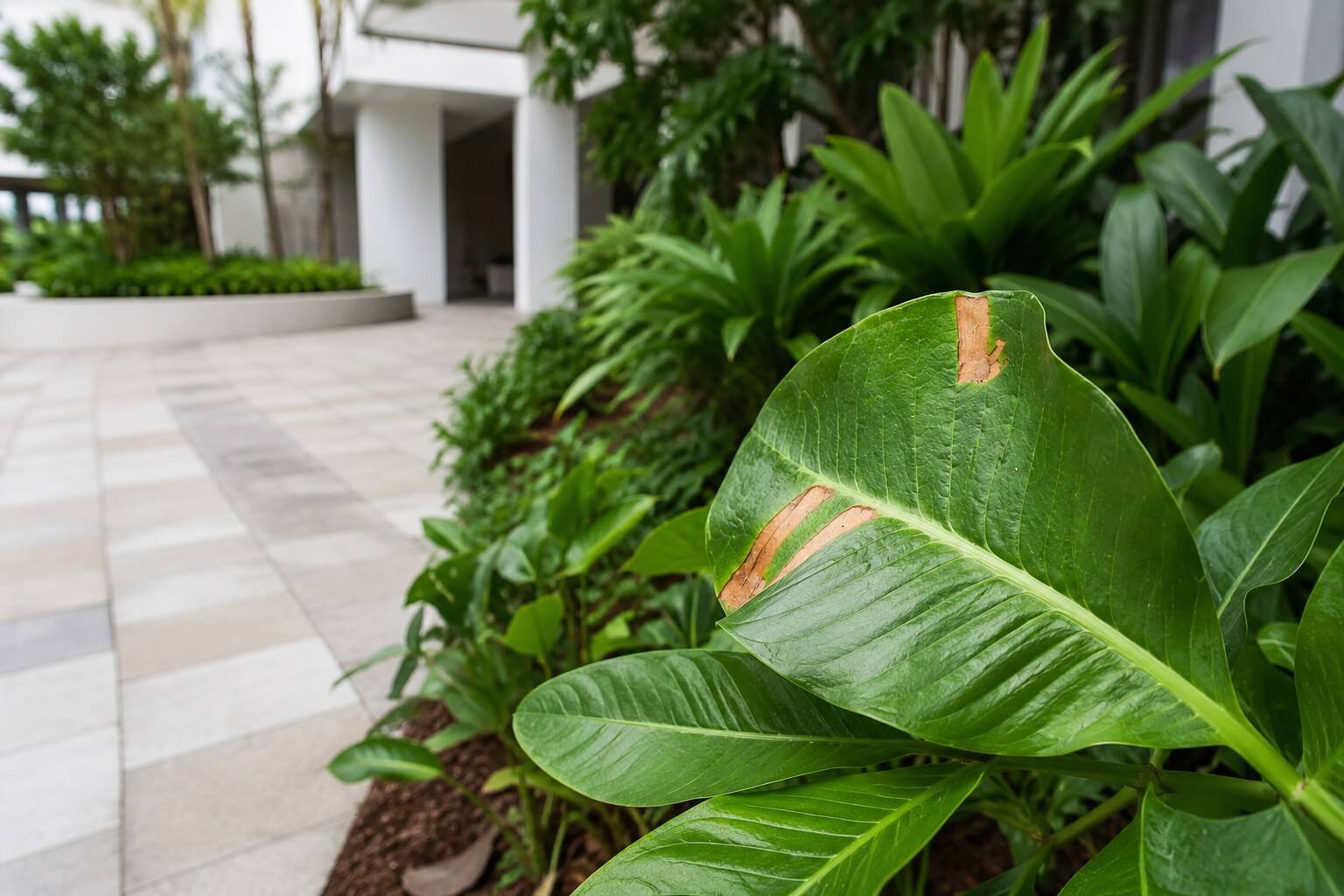
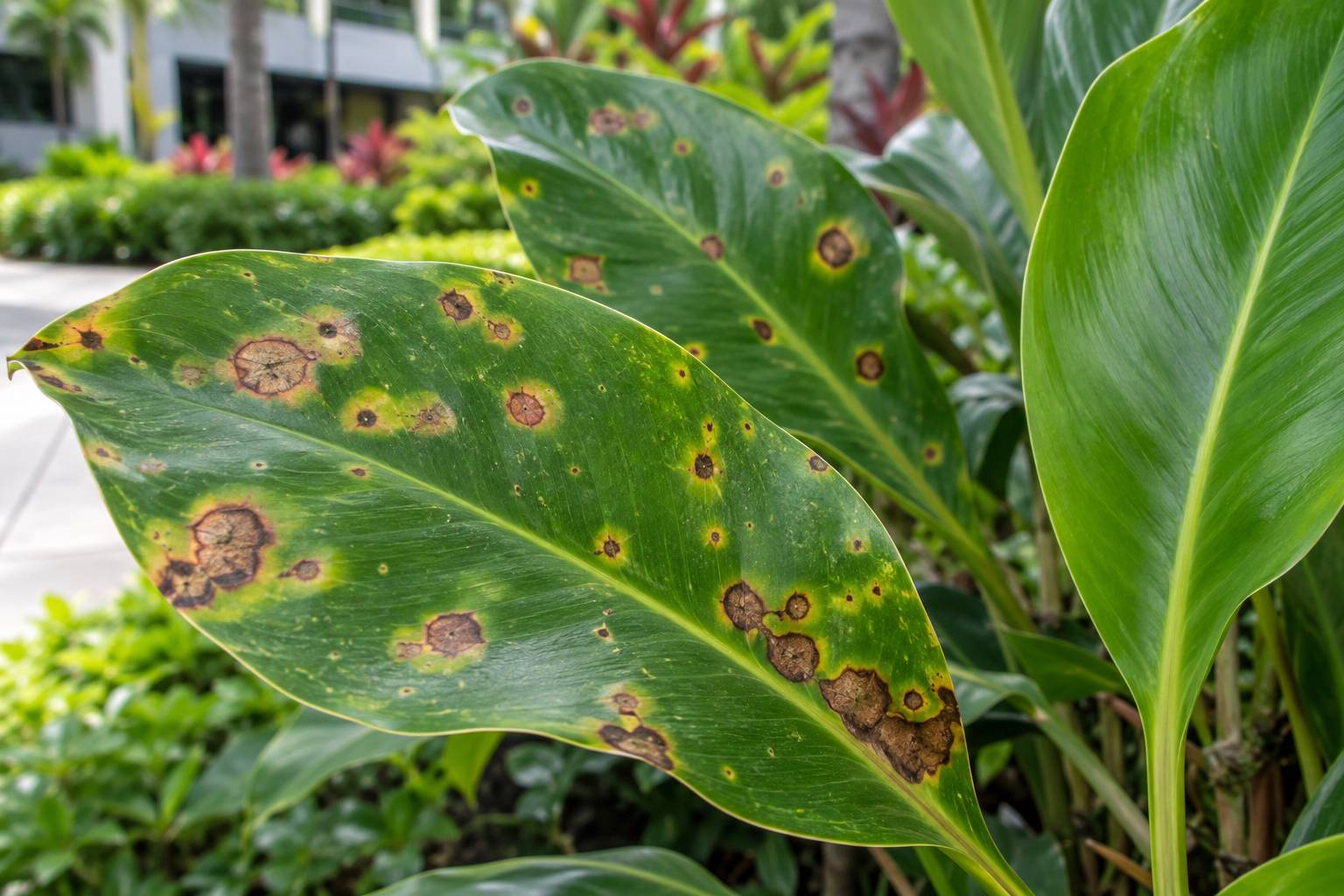
Different plant-health problems can produce similar symptoms. Yellowing may relate to water availability or root-zone conditions. Leaf spotting can involve disease, but physical injury or environmental stress may produce a similar appearance.

Visible condition What may need review
Leaf spots or lesions Distribution on the plant and whether symptoms are changing
Yellowing foliage Irrigation pattern and visible root-zone conditions
Wilting Soil moisture and whether the symptom affects one zone or a broader area
Dieback Affected branches and progression through the plant
Distorted growth New-growth pattern and visible signs of insect activity
Chewed or bored foliage Evidence that the concern may be insect-related rather than a disease

These observations do not replace laboratory analysis or specialist diagnosis when those services are required. Additional testing must be assigned separately unless the accepted proposal includes it.

What We Review Before Defining the Scope

Commercial plant-health concerns should be considered in the context of the property. Symptoms affecting one shrub may require a different response from similar damage appearing throughout an irrigation zone.

Site consideration Why it matters
Affected plant material Establishes which plants are included in the requested review
Symptom distribution Helps distinguish an isolated concern from a broader site pattern
Irrigation coverage Identifies visible overwatering or coverage concerns that may contribute to stress
Drainage conditions Shows whether water appears to collect near the affected root zone
Recent landscape work Identifies pruning or installation activity that may relate to the symptoms
Maintenance history Provides context about recent care without assuming it caused the condition
Property use Helps identify access or scheduling requirements around the affected area

We document observable conditions. If the cause cannot be established within the approved review, we do not present an unconfirmed conclusion as a diagnosis.

Distinguishing Disease From Environmental Stress

Plant-health problems can be biological or environmental. Disease organisms are one possible cause. Root damage or unsuitable moisture conditions can create a similar decline. Salt exposure may also affect plant material on some Oahu properties.
‍
The pattern across the landscape can provide useful context. Symptoms confined to one irrigation zone may justify reviewing water delivery. Damage limited to a recently disturbed area may require examination of the root zone or nearby work. These observations guide the next step, but they do not guarantee that a single cause will be identified during the first visit.
‍
If irrigation contributes to the concern, repair is not automatically included in disease control. The affected components and work must appear in a commercial landscape maintenance agreement or an approved installation scope.

Selecting a Commercial Disease-Control Approach

The proposed approach depends on the affected plant and likely cause. The scope may identify landscape corrections or removal of affected material when appropriate. A product application is included only when it is specifically documented.
‍
If a pesticide is proposed, the product must be suitable for the intended use site under its labeling. Application directions or restrictions on the product label must be followed. The Hawaiʻi Department of Agriculture and Biosecurity pesticide guidance explains that the label governs dosage and applicable precautions. Required protective equipment also comes from the label.
‍
We do not describe a treatment as universally safe for every commercial property. Instructions involving tenants or guests depend on the selected product label. Access to the treated area may also require property-specific coordination.

Coordinating Treatment With Property Operations

The affected area may be near an entry or an occupied outdoor space. Property management should identify operating restrictions before treatment is scheduled. The service scope should state which party is responsible for internal notices or access control when those steps are required.
‍
An approved treatment window is not assumed to include after-hours work. If the property requests a nonstandard schedule, that requirement must be reviewed before it becomes part of the agreement.
‍
Irrigation timing may affect a proposed application. Any adjustment required by the selected product label should be coordinated with the person responsible for the property’s irrigation system.

Disease Control and Recurring Landscape Maintenance

Ongoing landscape care may provide opportunities to observe changes in foliage or growth. It does not guarantee that disease or insect activity will be prevented.
‍
A commercial landscape maintenance agreement should state whether plant-health observation or follow-up work is included. Treatment performed under a separate disease-control scope does not automatically change the maintenance agreement.
‍
If pruning or removal is proposed, the affected plant material and handling requirements must be identified. Hauling material from the property may require a separate commercial debris and waste removal scope.

Plant Removal and Replacement Decisions

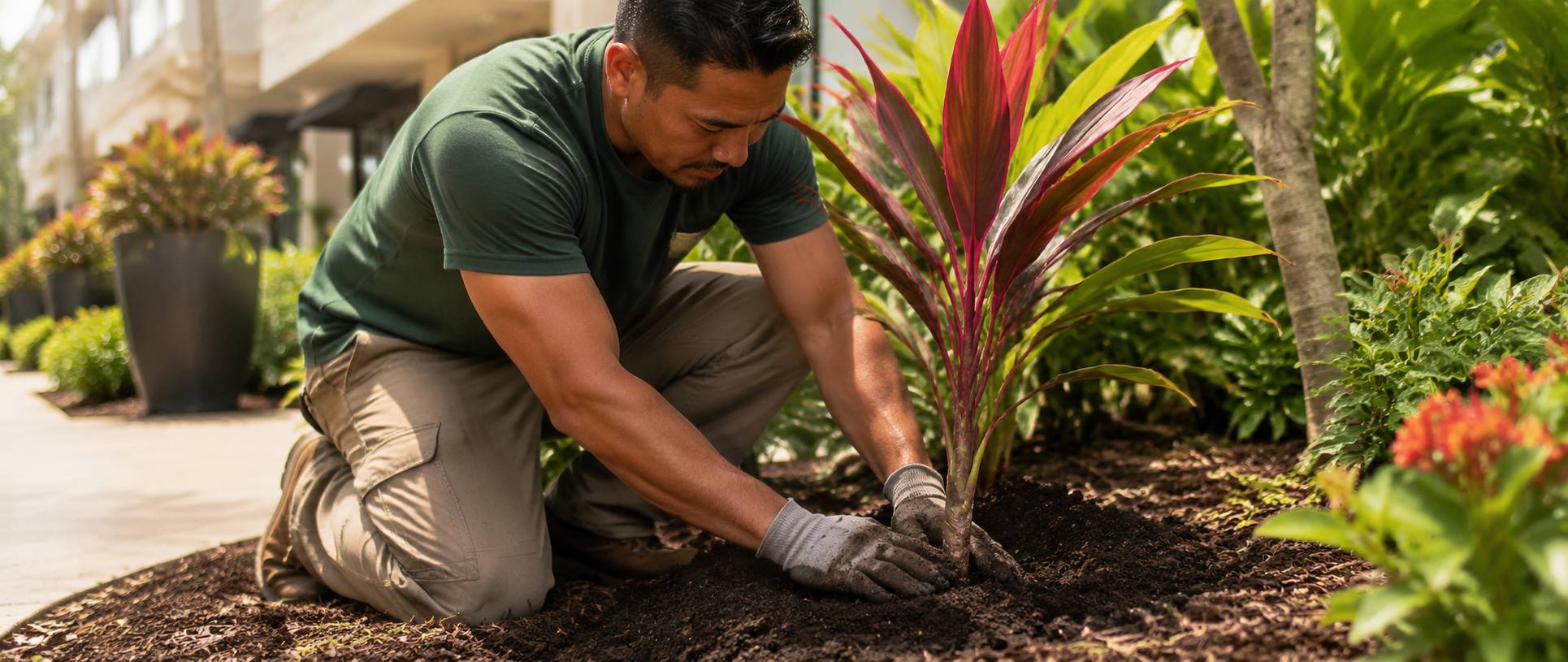
Treatment is not always the only project decision. A severely declined plant may need further evaluation before the property team decides whether to retain it. Removal or replacement should not be assumed from visible symptoms alone.
‍
If removal is approved, the proposal should identify the affected plant and required work. Stump handling must be stated separately. Soil removal is also a separate responsibility unless included.
‍
We operate a private landscape nursery in Kapolei, but inventory is not assumed to contain a requested replacement. Species and sizes are verified for each project before they become commitments.

Related Work Confirmed Separately

Some property needs may fall outside the initial commercial disease-control scope. The following items can be reviewed and documented separately when applicable.

Laboratory testing
Included only when the testing provider and responsibility are identified
Specialist diagnosis
Expertise outside our approved scope must be assigned separately
Irrigation repair
Requires documentation of the affected components and approved work
Plant removal
Requires written approval identifying the affected material
Replacement planting
Plant selection and availability must be confirmed separately
Debris hauling
Removal from the property requires an approved debris-removal scope
Repeat treatment
Included only when its timing and responsibilities are documented
Ongoing monitoring
Visit frequency and included landscape areas must appear in the agreement

Additional work requires authorization before it is added to the service.

Our Commercial Disease-Control Process

Project stage What we confirm
Initial request Affected plants and the symptoms reported by the property contact
Property review Observable plant conditions and relevant landscape factors
Scope development Proposed service and items requiring additional evaluation
Treatment confirmation Approved method and property-specific instructions
Scheduling Access requirements and the agreed service window
Follow-up Only the observations or additional work stated in the agreement

No treatment result is guaranteed. Plant response depends on the cause and existing condition of the affected material.

Commercial Disease-Control FAQs

Can you identify a plant disease from a photograph?
Does disease control include insect concerns?
Are disease-control treatments safe around tenants or guests?
Can treatment guarantee that a plant will recover?
Is irrigation repair included?
Can affected plants be removed and replaced?
Is recurring monitoring included in commercial maintenance?
How is commercial disease control priced?
contact

Request Commercial Plant Disease Control on Oahu

Contact us if you have noticed plant damage or changes within a commercial landscape. We will identify the property information needed to define the review before treatment or scheduling is confirmed.

Request a Commercial Plant-Health Review
Office
Kapolei Trade Center, 2045 Lauwiliwili Street, Suite 702, Kapolei, Hawaii 96707
License
CT-35972