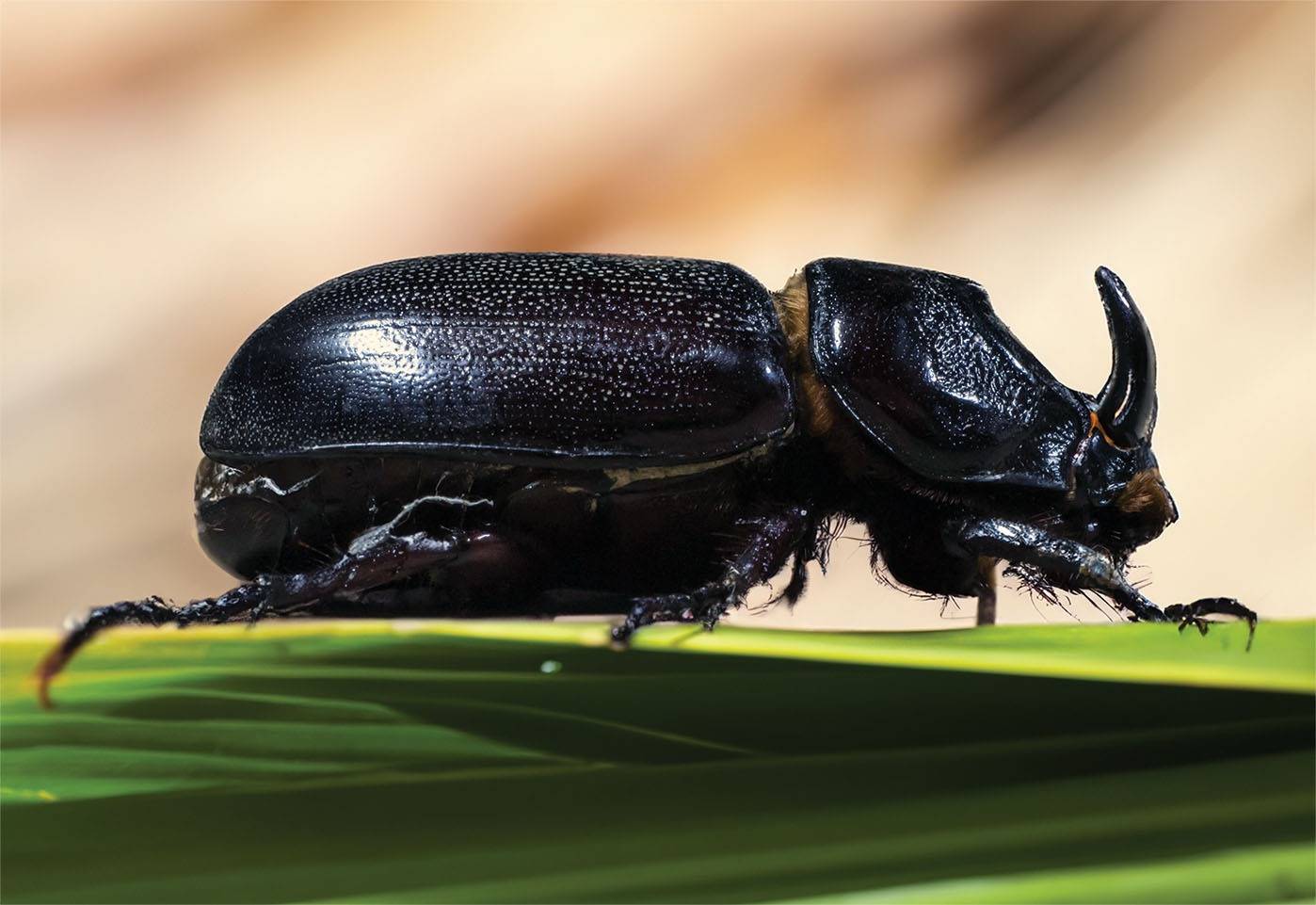
Adult coconut rhinoceros beetles bore into palm crowns. Damage can appear as affected fronds emerge. These signs justify review but do not establish a diagnosis.
CRB Hawaii identification and reporting guidance includes reference images. It currently states that Oahu residents do not need to report CRB, although the program can assist with identification. Homeowners should review the current page because instructions can change.
A CRB proposal should reflect the affected palm and site. Access or nearby organic material can change the work required.
If the beetle or cause of damage cannot be confirmed during the approved visit, we do not present an assumption as a diagnosis.
Our CRB services may use injection or soil drenching. We consider the palm and site before confirming either method. The selected product label determines whether it can be used.
We do not promise that one application will eliminate CRB activity. Treatment cannot restore tissue that is already damaged. Palm response depends on its condition and continued pest pressure.
.png)
CRB management can involve more than a standing palm because the beetle breeds in decomposing plant material. Dead palm material or stumps may warrant review. The same applies to decaying landscape waste.
CRB Hawaii treatment guidance states that no single treatment completely removes CRB from an area. Its approach addresses host palms and potential breeding material. Our scope identifies which of these property conditions are included.
Routine maintenance does not automatically include CRB treatment or prevent beetle activity. Requested observation must identify the included palms and frequency in a residential landscape maintenance agreement or separate CRB scope.
Suspected breeding material should not be handled as ordinary green waste without reviewing current requirements. CRB Hawaii advises treatment before infested material is removed.
Our proposal identifies any approved treatment or material movement. Palm removal and stump work require express inclusion. Hauling must also be defined. A related residential debris and waste removal scope can coordinate material removal with CRB requirements.
Suspected infested material should be reviewed against current guidance before movement.

If a pesticide application is proposed, the selected product must be labeled for the intended site and use. The Hawaii Department of Agriculture and Biosecurity pesticide guidance explains that label directions govern dosage and precautions. Required protective equipment also comes from the label.
We do not describe an application as universally safe. Instructions involving residents or pets depend on the selected product label. Treatment-area access may require coordination.
Before approval, the homeowner should disclose coconut harvesting for food and access constraints that could affect product selection.
A written scope keeps related landscape needs from being mistaken for approved CRB work.
These boundaries clarify what the homeowner is authorizing.
No treatment result is guaranteed. Additional applications or removal work require authorization unless they are already included in the accepted proposal.
CRB management may connect to a larger landscape need. Explore our other residential services below. Each service receives its own approved scope unless the proposal states otherwise.
View the complete residential service overview
Plan planting and landscape improvements around the property
Complete approved planting and site preparation work
Define ongoing landscape care for the property
Remove approved landscape debris from the property
Add approved lighting to selected landscape areas
Address identified insect concerns or plant-disease conditions
V-shaped cuts in emerging palm fronds and bore holes near the crown can indicate CRB activity. Other causes can damage palms, so these signs should lead to further review rather than an automatic conclusion.
CRB Hawaii currently states that Oahu residents do not need to report CRB. Its reporting page also provides instructions for handling an adult beetle and requesting identification help. Review the current official page because guidance may change.
Yes. We offer injection and soil drenching as potential CRB treatment methods. The approved method depends on palm and site conditions. It must also comply with the selected product label.
No result should be guaranteed. Official CRB Hawaii guidance states that no single treatment completely removes CRB from an area. Follow-up work is included only when documented.
No. Palm removal is a separate service responsibility unless the accepted proposal specifically includes the identified palm and handling requirements.
Not automatically. Suspected infested material should be reviewed before movement. Any required treatment and approved disposal responsibilities must be documented.
We do not make a universal safety claim. The selected product label determines applicable precautions and property instructions.
Pricing depends on the number of palms and approved treatment scope. Access requirements or separately authorized material handling can also affect the proposal.