Engineering services

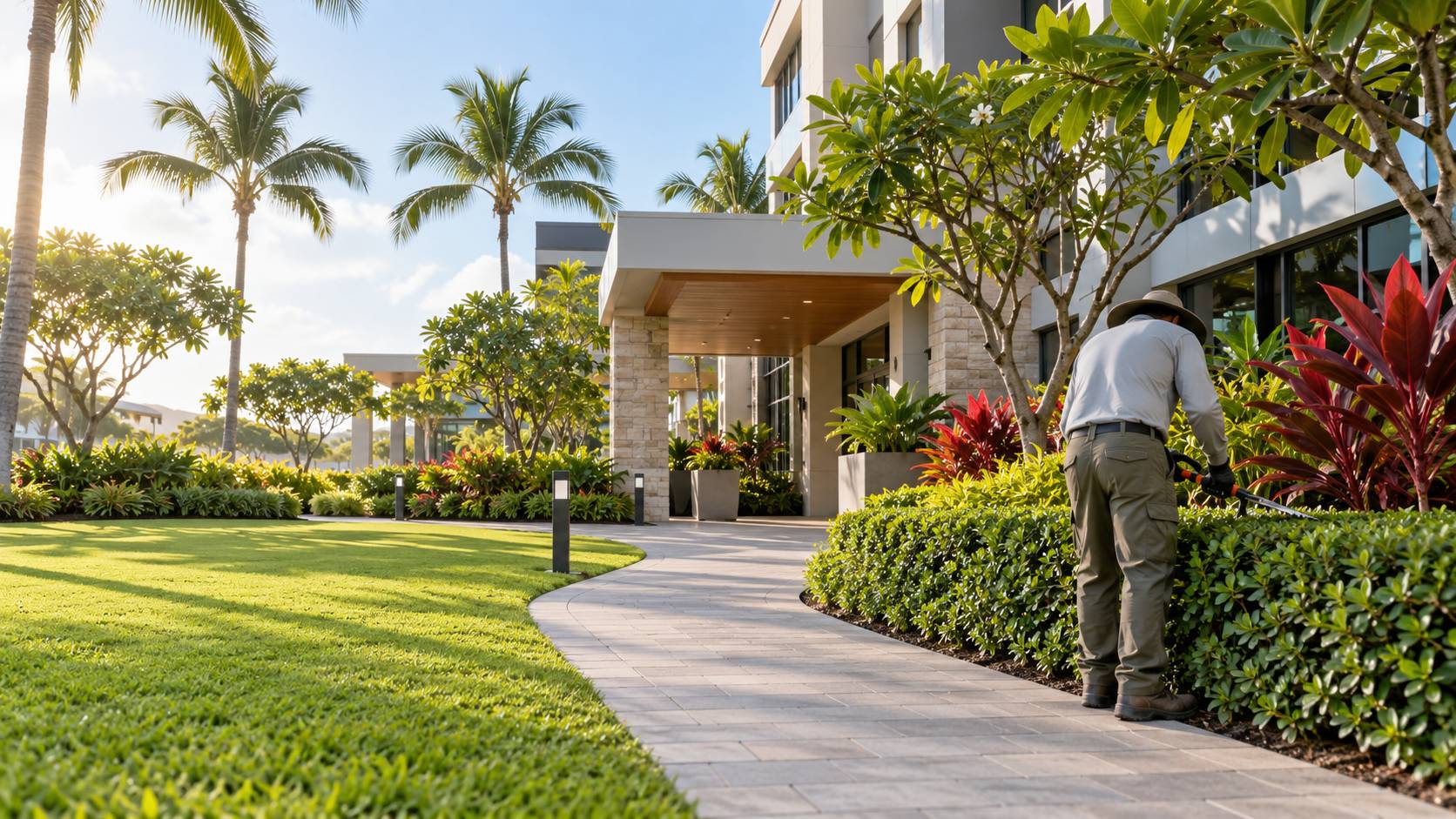
Commercial sites have operational requirements that should be identified before work begins. An office property may need landscape activity coordinated around business hours. A shopping center may place greater emphasis on storefront visibility and pedestrian routes. Hotels can require work planning that accounts for guest areas. Industrial properties may have delivery access or controlled work zones.
We begin by identifying the property areas included in the request. Existing landscape conditions and access limitations are reviewed within the approved scope. We also document known operating restrictions that could affect field work.
This process creates a practical basis for the proposal. It does not assume that every landscape feature or related trade is included. Plant quantities and material availability are confirmed before they become project commitments. Scheduling is also confirmed through the accepted scope.
Commercial landscaping may involve more than one service category. Explore our related commercial services below. Each service receives its own approved scope unless the proposal states otherwise.
Plan planting and landscape improvements around property operations
Complete approved planting and site preparation work
Define recurring landscape care and service responsibilities
Remove approved landscape debris from the property
Add approved lighting to selected landscape areas
Address identified insect concerns or plant-disease conditions
Evaluate suspected coconut rhinoceros beetle activity
A commercial landscape proposal should reflect actual site conditions and the way the property operates.
Our landscape review is limited to the accepted service. It is not a substitute for civil or structural engineering. Permit requirements and design responsibilities outside our scope must be assigned to the appropriate professional.
The required landscape scope depends on how each property is used. We do not apply the same service assumptions to every commercial site.
These considerations help define questions for the property walk. They are not automatic service commitments. The accepted proposal determines the areas and work included for the property.
Commercial landscape design establishes what is to be built. Installation translates the approved documents into field work. Keeping those phases connected can reduce uncertainty, but each phase still needs defined deliverables.
The commercial landscape design scope should identify the property areas being planned and the documents we are expected to provide. If another landscape architect or design professional supplies the plans, responsibility for design decisions remains with the party identified in the project documents.
The commercial landscape installation scope should identify planting and approved site preparation. Irrigation setup or landscape drainage can be included when documented. Structural drainage design and work affecting buildings require direction from the responsible professional.
Field changes are not assumed to be approved. Material substitutions or changes affecting quantity should follow the project’s authorization process before installation proceeds.

We operate a private landscape nursery in Kapolei. When specified plant material is confirmed in our inventory, local sourcing can reduce reliance on trans-Pacific shipments and support project planning.
Nursery access does not mean every species or requested size is immediately available. We verify plant type and quantity for each project. Large-format material is included only after availability has been confirmed. If a specified item is unavailable, any proposed substitution requires review before it becomes part of the project.
For phased developments, plant requirements should be reviewed against the construction schedule. Future availability is not assumed from current inventory. Material reservations or growing responsibilities must be stated in the agreement if they are part of the project.
Installation completion does not automatically create an ongoing maintenance agreement. Establishment requirements and recurring care should be defined before responsibility transfers.
A commercial landscape maintenance scope can identify service areas and planned visit frequency. It should also state the recurring tasks included. Irrigation observation does not automatically authorize repairs. Plant-health observation does not automatically include treatment.
This distinction matters when different parties are responsible for construction closeout and continuing property operations. Written boundaries make it easier to determine which work belongs to the installation phase and which work requires separate approval.
A commercial landscaping request does not authorize every related property service.
We use these boundaries to keep the proposal tied to the requested landscape work. Additional services require authorization before they are added.
The process can be adjusted to the project documents or procurement requirements provided for review. Acceptance of a requested deadline is not assumed until the scope and material requirements have been evaluated.
We provide commercial landscaping services on Oahu. Property access and the requested scope must be reviewed before scheduling is confirmed.
We work with commercial properties and developments. Examples include office buildings and shopping centers. Industrial properties or hotels can also request a property-specific review.
We can scope commercial design and installation as connected phases. The accepted proposal identifies our deliverables and the responsibilities assigned to other project professionals.
Irrigation setup and landscape drainage can be included when documented in the installation scope. Engineered drainage or work affecting structures may require separate professional direction.
We can review supplied project documents when defining an installation scope. Design responsibility and field-change approval must remain clear in the project documentation.
Maintenance is included only when it appears in the accepted proposal or a separate agreement. Visit frequency and recurring responsibilities must be documented.
No. We verify species and quantities for each project. Requested sizes also require confirmation before they become commitments.
Pricing depends on the property and approved scope. Access requirements or material selections can affect the proposal. We review the requested work before presenting pricing.