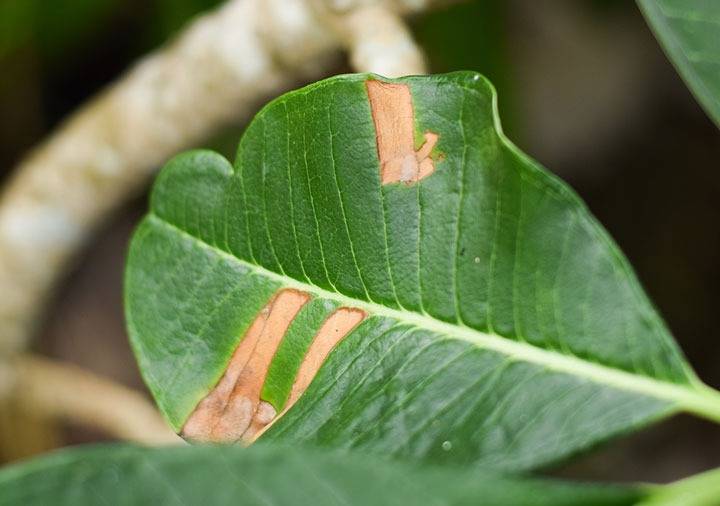
A plant may display similar symptoms for different reasons. Yellowing can relate to root-zone conditions or water availability. Leaf spotting may involve disease, but it can also reflect physical injury or another form of stress. Wilting does not establish whether the plant is receiving too little water or whether the roots are functioning as intended.
This initial review does not replace laboratory analysis or specialist diagnosis when those services are needed. Responsibility for additional testing must be confirmed separately.
Plant symptoms should be considered in the context of the property. A problem affecting one shrub may require a different response from similar symptoms appearing throughout an irrigation zone.
We document observable conditions and identify questions that remain unresolved. If the cause cannot be established within the approved scope, we do not present an unconfirmed conclusion as a diagnosis.
.png)
Plant-health problems can be biological or environmental. Disease organisms are one possible cause. Root damage or unsuitable moisture conditions can create a similar decline. Salt exposure may also affect plants on some properties.
The pattern across the landscape can provide useful context. Symptoms confined to an irrigation zone may justify reviewing water delivery. Damage limited to a recently disturbed area may require examination of the root zone or nearby work. These observations guide the next step, but they do not guarantee that a single cause will be identified during the first visit.
If an irrigation concern is part of the problem, repair or adjustment is not automatically included in disease control. That work must be documented under the appropriate residential installation or maintenance scope.
The proposed approach depends on the affected plant and the likely cause. The scope may identify landscape corrections or removal of affected material when appropriate. A product application is included only when it is specifically documented.
If a pesticide is proposed, the product must be suitable for the identified use site and intended target under its labeling. Application directions or restrictions on the product label must be followed. The label also determines relevant precautions and site instructions.
We do not describe a treatment as universally safe for every property. Conditions involving residents or pets must be addressed according to the selected product’s label. The same applies to irrigation timing and access to a treated area.

Ongoing landscape care can affect how plant-health concerns are observed. Regular maintenance may provide opportunities to notice changes in foliage or growth. It does not guarantee that disease or insect activity will be prevented.
A residential landscape maintenance agreement should state whether monitoring or follow-up work is included. Treatment performed under a separate disease-control scope does not automatically change the maintenance agreement.
If pruning or removal is proposed, the affected plant material and handling requirements must be identified. Hauling that material away from the property may require a separate debris and waste removal scope.
Treatment is not always the only project decision. A severely declined plant may need further evaluation before the homeowner decides whether to retain it. Removal or replacement should not be assumed from the presence of visible symptoms.
If removal is approved, the proposal should identify the plant and the work involved. Stump handling or soil removal must be stated separately. If a replacement is requested, plant selection and nursery availability also require confirmation.
We operate a private landscape nursery in Kapolei, but inventory is not assumed to contain a requested replacement. Species and sizes are verified for each project before they become commitments.
A clear disease-control proposal distinguishes the approved service from related landscape or specialist responsibilities.
These boundaries prevent an initial plant-health review from being interpreted as authorization for unrelated work.
No treatment result is guaranteed. Plant response depends on the cause and condition of the affected material. Additional work requires authorization before it is added to the service.
Disease control may connect to a larger landscape need. Explore our other residential services below. Each service receives its own approved scope unless the proposal states otherwise.
View the complete residential service overview
Plan planting and landscape improvements around the property
Complete approved planting and site preparation work
Define ongoing landscape care for the property
Remove approved landscape debris from the property
Add approved lighting to selected landscape areas
Evaluate suspected coconut rhinoceros beetle activity
A photograph may help document visible symptoms, but it may not establish the cause. Site conditions and the distribution of symptoms may also need to be reviewed.
Insect-related concerns can be reviewed as part of a confirmed scope. The proposed service depends on the affected plant and visible evidence at the property.
We do not describe any treatment as universally safe. If a product is included, its label determines applicable precautions and property instructions.
No. Plant response depends on the cause and existing condition. The approved service defines the work but does not guarantee recovery.
Irrigation repair is included only when the affected components and work appear in the proposal. It is not automatically part of disease control.
Removal or replacement can be discussed as separate work. The specific plant and disposal requirements must be confirmed. Replacement availability must also be verified.
Pricing depends on the affected material and approved scope. Additional testing or related landscape work can affect the proposal when authorized.