.svg)
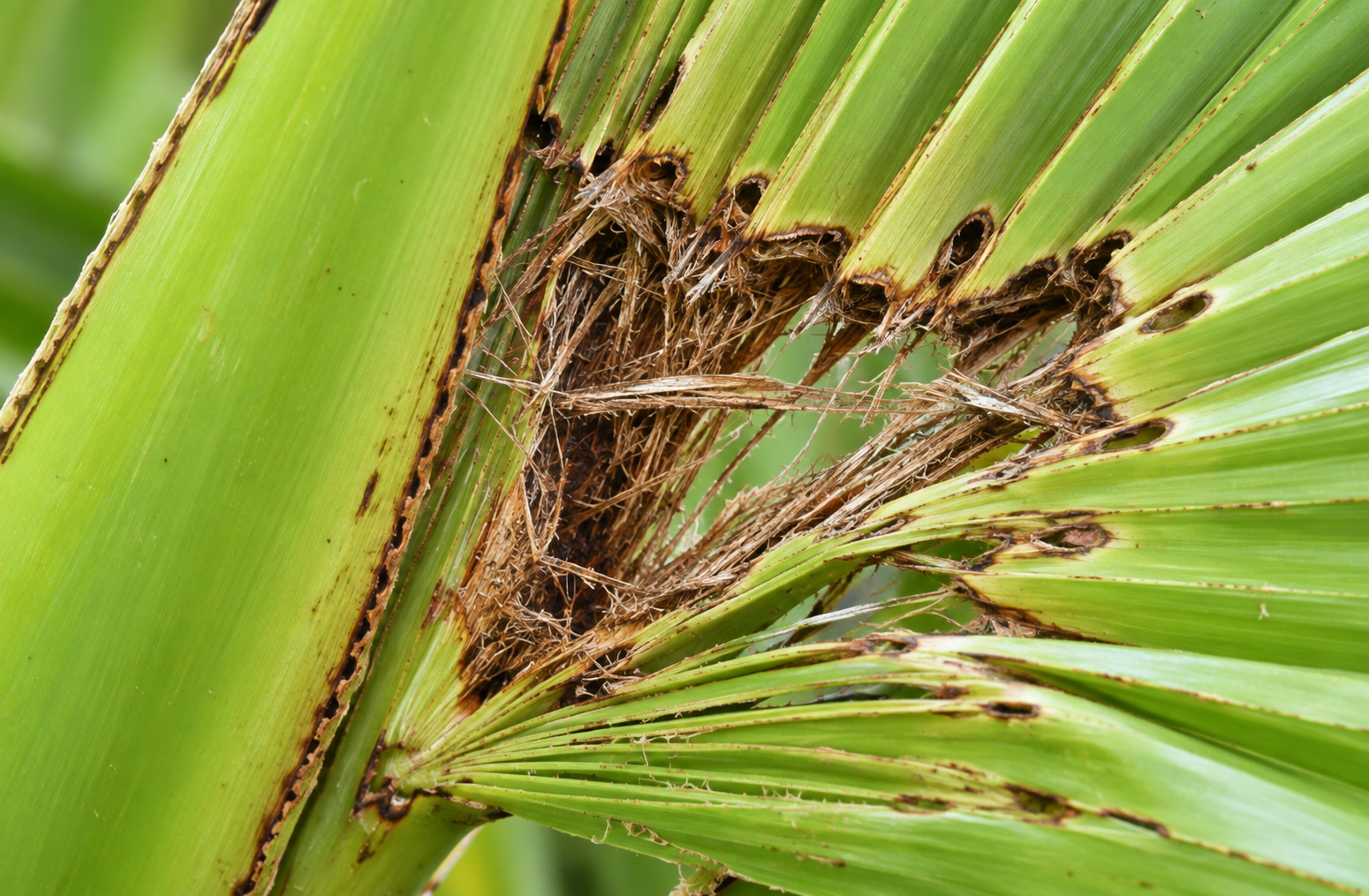
The Coconut Rhinoceros Beetle poses a severe threat to commercial landscapes across Oahu. Late-summer storms and high winds generate massive amounts of green waste. This organic debris creates perfect breeding grounds for the invasive pest. Property managers and HOA boards often panic when they spot v-shaped cuts in their palm fronds. They rush to hire a landscape contractor to "fix" the problem, without understanding that CRB management is not a single service.
Treating an infestation requires distinct, highly specialized scopes of work. A vendor capable of applying pesticides to a standing palm may not hold the equipment necessary to grind a massive stump. Pacific Island Landscape provides transparent, multi-stage CRB property management. We align our services strictly with the guidelines set by Coconut Rhinoceros Beetle Response Hawaiʻi. This guide breaks down the separate operational scopes required to manage this pest so you understand exactly what you are buying.
Scope 1: Standing-Palm Treatment and Monitoring
The first line of defense focuses on living, standing palms. Adult beetles bore into the crowns of healthy trees to feed on the sap. This feeding behavior destroys the developing fronds and eventually kills the palm. If a tree shows early signs of damage but remains structurally viable, the property requires targeted pesticide application.
Pesticide treatments are not universally safe. They demand strict adherence to state regulations and specific product labels. Our licensed applicators utilize systemic treatments designed specifically for the Coconut Rhinoceros Beetle. We inject or apply these products to protect the living crown. We do not promise complete pest eradication, because the surrounding island environment remains highly active. We focus on protecting your specific botanical assets.
This scope also includes active monitoring. We deploy and maintain specialized pheromone traps across your commercial property. These traps help our account managers track the local adult beetle population. The data collected from these traps dictates the frequency of our future pesticide applications.
Scope 2: Hazardous Palm Removal
When a palm sustains catastrophic crown damage, treatment is no longer an option. A dead palm tree is a severe liability for a commercial property owner. The trunk rots rapidly. A high trade wind can easily snap the dead trunk, sending thousands of pounds of wood crashing onto a pedestrian walkway or a parked vehicle.
Removing a mature, dead palm requires specialized heavy equipment. It is entirely separate from routine canopy pruning or ground-level pesticide application. Our tree removal crews utilize cranes and bucket trucks to dismantle hazardous palms safely. We lower the heavy trunk sections in controlled drops to protect your surrounding hardscape.
Property managers must verify that their landscape contractor explicitly includes crane work and hazardous removal in their service agreement. Assuming that a vendor will remove a dead 60-foot palm just because they handle your weekly mowing is a massive logistical error.
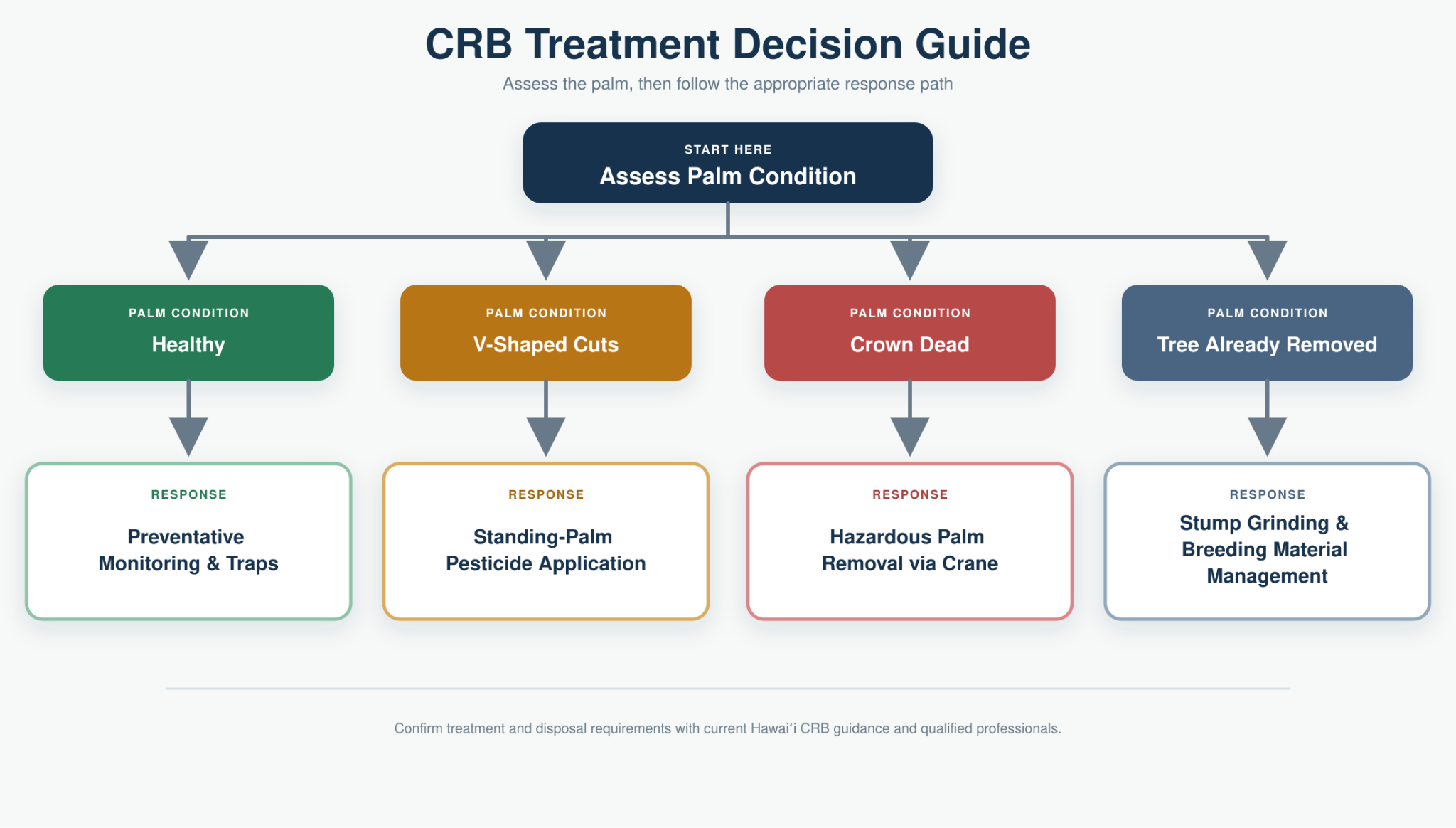
Scope 3: Stump Grinding and Excavation
Cutting down a dead palm does not eliminate the CRB threat. The beetles do not breed in the high canopy; they breed in decaying organic matter on the ground. The rotting stump left behind after a tree removal acts as an incubator for hundreds of CRB larvae.
Stump removal is a distinct, heavy-machinery scope. Many budget landscape vendors will cut a tree flush to the grass and leave the root mass underground. This guarantees a localized breeding site.
Our operators utilize commercial stump grinders to pulverize the remaining wood. We grind the stump well below the soil grade. We excavate the surrounding soil to remove the lateral root structures. This aggressive mechanical approach destroys the decaying material the beetle requires to reproduce. If your vendor proposal does not explicitly list "stump grinding and excavation," you are leaving a massive liability in the ground.
Scope 4: Breeding-Material Management and Hauling
The final and most critical scope involves managing the green waste generated by storms and tree removals. The Coconut Rhinoceros Beetle thrives in mulch piles, compost bins, and decaying logs. Transporting infested green waste across Oahu is the primary way this invasive species spreads to new neighborhoods.
Hauling CRB-exposed material requires strict compliance with Hawaiʻi Department of Agriculture guidelines. You cannot simply throw an infested palm trunk into a standard roll-off dumpster.
Pacific Island Landscape manages commercial green waste with rigorous containment protocols. We chip the palm material to specific size requirements to physically destroy existing larvae. We transport the processed debris to approved disposal facilities. We ensure your property remains compliant with local agricultural quarantines.
| CRB Management Scope | Operational Action | Primary Objective |
|---|---|---|
| Standing-Palm Treatment | Apply labeled pesticides and monitor pheromone traps. | Protect viable trees and track localized adult populations. |
| Hazardous Palm Removal | Dismantle dead trees using cranes and bucket trucks. | Eliminate fall hazards over pedestrian walkways and parking lots. |
| Stump Grinding | Pulverize the root mass below soil grade. | Destroy ground-level decaying wood used for breeding. |
| Green Waste Hauling | Chip debris and transport to approved facilities. | Comply with state quarantines and prevent the spread of larvae. |
Request a CRB Property Review
Protecting your commercial asset from the Coconut Rhinoceros Beetle requires a multi-stage operational approach. You cannot rely on a single pesticide spray to solve a complex infestation. Your facility needs a landscape partner equipped to handle chemical treatments, heavy tree removals, and compliant debris hauling.
Pacific Island Landscape holds Hawaii contractor license CT-35972. We possess the internal infrastructure to execute every phase of CRB management safely. We invite resort directors, HOA boards, and property managers to schedule a comprehensive site evaluation. Please submit your property details through our contact page. Our estimating team will isolate your specific vulnerabilities and propose a targeted management scope to protect your commercial landscape.
.svg)