
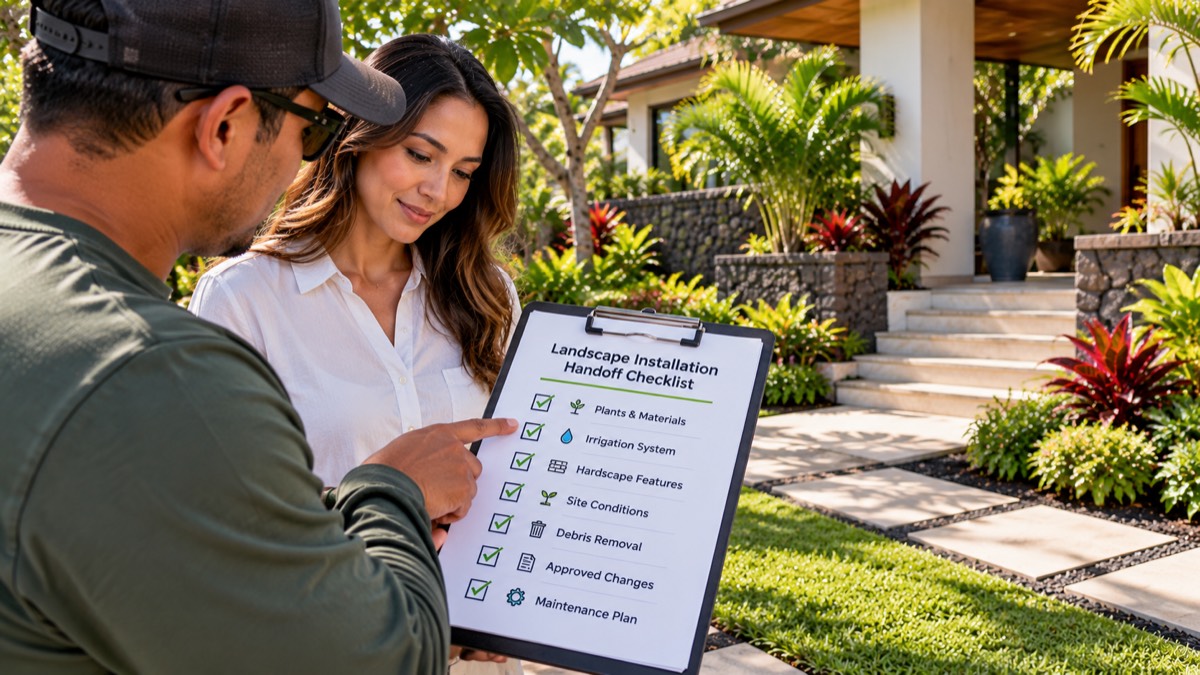
A landscape installation can look finished before every part of the project has been reviewed. The plants are in place, the walkways are complete, and the irrigation system appears to be working. But before approving the work, homeowners should confirm that everything matches the agreed plans and understand what happens after the installation crew leaves.
On Oahu, this is particularly important because wind exposure, irrigation requirements, and plant-growing conditions vary between properties. At Pacific Island Landscape, we provide residential landscape installation for custom homes and estate renovations, working with homeowners and landscape architects to carry approved plans through installation.
This checklist covers what to inspect during the final walkthrough and how to prepare for ongoing landscape care.
Why a Final Landscape Walkthrough Matters
Landscape installation involves more than planting trees and shrubs. Depending on the approved proposal, the project may include irrigation, grading, planting beds, hardscape features, and landscape debris removal. These elements must work together, and a finished appearance does not necessarily confirm that every component meets the agreed requirements.
A final walkthrough allows homeowners to compare completed work against the written scope, identify outstanding concerns, and clarify ongoing maintenance responsibilities.
For projects involving a landscape architect, the review should also confirm that the installation follows the approved drawings. We work as a build partner for landscape architects and do not make unauthorized material substitutions. Any proposed changes should follow the agreed approval process.
1. Confirm the Plants Match the Approved Plan
Start by comparing the installed plants with the approved planting schedule. Check their locations, quantities, and specified materials, particularly for mature specimen trees, privacy hedges, and plants selected for specific site conditions.
A replacement plant may look similar to the original selection but have different growth habits or maintenance requirements. For this reason, substitutions should be reviewed and approved before installation.
We operate a private nursery in Kapolei, where clients and landscape architects can arrange to view available large-format trees, established hedging, and other botanical specimens. Availability is confirmed for each project, so specified material should never be assumed to be in stock.
During the walkthrough, also consider how the plants will grow around pathways, walls, and outdoor living spaces. Their placement should support the intended design beyond the installation day.
2. Review Irrigation Coverage and Operation
An irrigation system can activate normally while still distributing water unevenly. Before approving the installation, ask the contractor to demonstrate how the irrigation zones operate and explain the controller settings.
Watch for sprinkler heads spraying onto walkways, areas receiving noticeably different amounts of water, or planting beds where water accumulates. These observations may indicate problems requiring adjustment or further evaluation.
Use this checklist during the irrigation review:
| Irrigation Item | What to Check |
|---|---|
| Sprinkler coverage | Water reaches the intended planting areas |
| Irrigation zones | Each zone operates as intended |
| Controller | Settings and operating schedule are explained |
| System components | No obvious leaks or damaged heads |
| Planting beds | No unexplained pooling or excessive runoff |
Oahu's microclimates make appropriate irrigation particularly important. A wind-exposed planting area may have different requirements from a sheltered courtyard, even on the same property.
Our installation work can include irrigation when specified in the project scope. We also provide residential maintenance and irrigation auditing under approved ongoing maintenance agreements.
3. Inspect Hardscape Features and Landscape Boundaries
Hardscape elements such as stone pathways, driveway borders, and retaining walls help organize the landscape and connect different outdoor areas. During the walkthrough, compare these features with the approved layout and identify any visible concerns.
Check whether pathways connect properly to entrances, planting beds follow their intended boundaries, and installed surfaces match the agreed scope. Pay attention to areas where growing plants may eventually extend into walking routes or other functional spaces.
If the project involved grading or drainage-related landscape work, clarify exactly what was completed. Structural engineering, foundation repairs, and engineered drainage design are separate professional responsibilities unless specifically documented.
4. Identify Planting Conditions That Need Follow-Up
Newly installed plants require attention as they establish, but their care depends on species, planting conditions, and exposure. During the walkthrough, ask whether particular trees, hedges, or planting areas need additional observation.
Existing plant-health concerns should also be documented. A mature palm showing signs of decline before installation should not automatically be treated as a problem caused by the new work.
For palms with possible coconut rhinoceros beetle activity, we offer residential CRB removal and treatment under a separately approved scope. Treatment recommendations depend on the observed conditions, and no treatment guarantees palm recovery or complete beetle elimination.
The goal is to distinguish normal establishment needs from issues requiring additional assessment or specialized care.
5. Confirm Debris Removal and Site Cleanup
Landscape installation can produce branches, soil, clippings, and other materials that need to be handled before project closeout. Review the agreed cleanup responsibilities and confirm which materials should have been removed.
Routine installation debris may be included in the project scope, while existing stumps, substantial excavation material, or debris left by another contractor may require separate work.
Our residential landscaping services use written scopes that identify included work and exclusions. If additional cleanup is needed, the responsibilities and any associated costs should be approved rather than assumed.
6. Review Changes and Outstanding Work
Site conditions or material availability may require changes during installation. Before approving the completed project, compare the work with the original scope and any written change authorizations.
Make sure substitutions, layout adjustments, or additional work were approved. If something remains incomplete, document the item and identify who is responsible for addressing it.
A useful project handoff record should include:
- Approved planting plans and material selections
- Authorized changes to the original scope
- Outstanding work and assigned responsibilities
- Irrigation operating information
- Separately approved specialty services
- Maintenance responsibilities after installation
The exact documentation will depend on the project agreement. Larger projects may also require coordination with a landscape architect or designated property representative before final acceptance.
7. Establish the Maintenance Plan After Installation
Completing a landscape installation does not automatically mean ongoing maintenance is included. Before the project closes, homeowners should understand who will inspect irrigation, maintain hedges, manage tree growth, and address future plant-health concerns.
Our residential estate maintenance programs include hedge and plant care, irrigation auditing, canopy management, and approved hardscape clearing. A dedicated senior account manager provides a defined point of contact for maintenance requests and scope adjustments.
We can also take over landscapes installed by other contractors following a site audit. This allows us to assess the property's existing conditions before defining an appropriate maintenance agreement.
Establishing these responsibilities at handoff helps prevent confusion about which services continue after installation and which require separate approval.
Questions to Ask Before Final Approval
The final walkthrough is your opportunity to clarify anything that remains uncertain. Before accepting the installation, ask the contractor to explain whether the approved scope has been completed, how outstanding concerns will be addressed, and what documentation you should retain.
You should also understand how the irrigation system operates and who will handle future maintenance. If the landscape includes mature trees or specialty plantings, discuss any particular care requirements.
Avoid assuming that every newly installed plant will thrive without further attention. Plant performance depends on site conditions and ongoing maintenance, and any specific warranty must be established through the applicable agreement.
Planning a Landscape Installation on Oahu?
A completed landscape should come with a clear understanding of what was installed, which responsibilities have been fulfilled, and what care the property will need afterward.
At Pacific Island Landscape, we provide residential landscape design and installation for custom homes and estate renovations across Oahu. We coordinate with homeowners and landscape architects to translate approved plans into completed landscape improvements, with plant material sourced through our Kapolei nursery when suitable inventory is available.
If you're planning a new landscape or substantial property renovation, we can review your requirements and develop a written scope based on the proposed work.
Request a residential installation consultation or call 808-347-4462. You can also email aloha@landscapeoahu.com with your property location and available project plans.