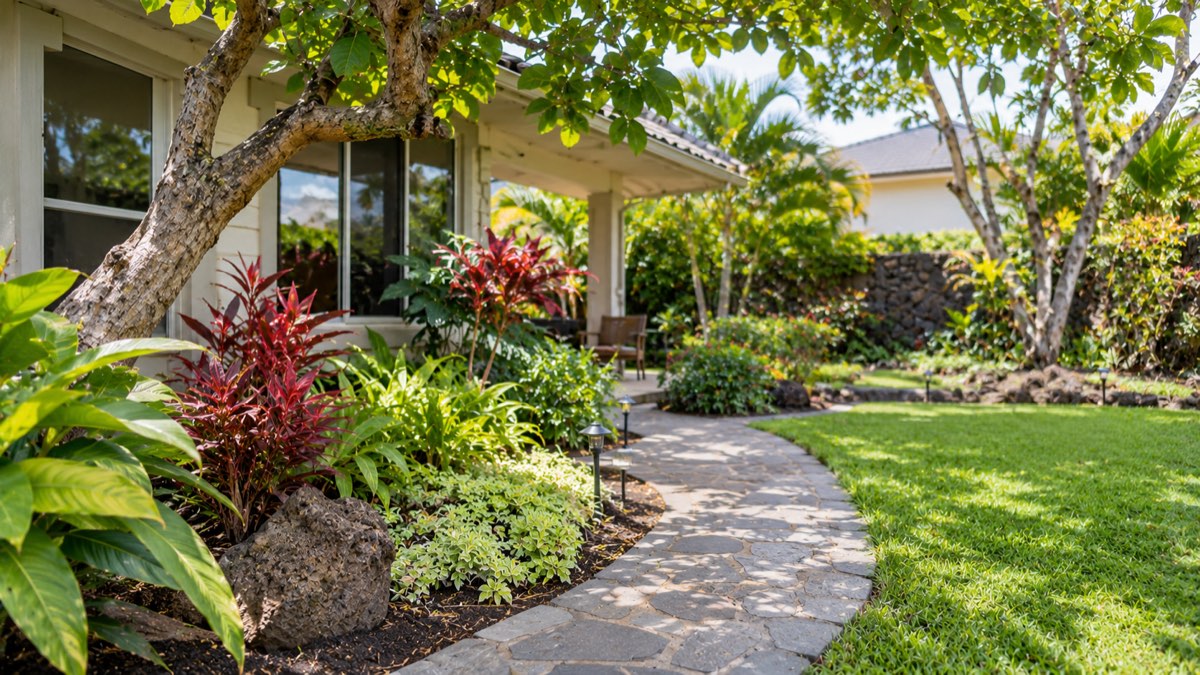
An established landscape does not always need to be completely removed to look and function better. Sometimes the problem is an overgrown planting bed, irrigation that no longer reaches the right areas, or a mature tree that has outgrown its original location. Other properties need more substantial changes because the existing layout no longer suits how the outdoor space is used.
For Oahu homeowners, deciding what to keep can be just as important as choosing what to install. Mature trees may provide valuable shade, established hedges may already offer privacy, and existing pathways might still serve their purpose. Removing these features without evaluating them can add unnecessary work to a renovation.
At Pacific Island Landscape, we provide residential landscaping services on Oahu, including property-specific design and installation work. Before recommending improvements, we consider the existing landscape, your priorities, and the conditions that affect what can reasonably be retained.
When Does an Oahu Landscape Need Renovation?
Landscape renovation becomes worth considering when routine maintenance can no longer address the property's main problems. A hedge that needs pruning may simply require better ongoing care, while a hedge planted too close to a walkway may continue creating problems regardless of how frequently it is trimmed.
Other signs include planting beds that have become overcrowded, irrigation systems that do not adequately serve the current landscape, and outdoor areas that no longer match the homeowner's needs. A property may also have inherited landscaping from a previous owner that does not fit its architecture or intended use.
Oahu's growing conditions add another consideration. A planting arrangement that performs well in a protected courtyard may struggle on an exposed coastal property. Wind, sunlight, soil conditions, and available water should influence whether existing plants remain suitable.
Rather than treating every problem as a reason for replacement, a renovation assessment should determine whether maintenance, targeted improvements, or a broader redesign is the appropriate next step.
What Landscape Features Are Worth Keeping?
One of the first decisions in landscape renovation is identifying which existing features still provide value. Retaining suitable elements can preserve the character of an established property while allowing improvements to focus on areas that genuinely need attention.
Mature Trees and Established Hedges
Mature trees often contribute shade, visual structure, and a sense of scale that younger plantings cannot immediately replicate. Established privacy hedges may also provide screening that would otherwise require substantial new planting.
However, a tree's size alone does not establish whether it should stay. Its visible condition, location, available growing space, and relationship to buildings or access routes all deserve attention. Where tree condition or removal involves specialized concerns, an appropriate assessment should guide the decision.
Hedges should be evaluated similarly. If they remain healthy and appropriately positioned, selective pruning or improvements to the surrounding planting areas may be enough. If their placement conflicts with the property's intended layout, replacement or redesign may be more practical.
Existing Pathways and Hardscape
Walkways, paved areas, garden borders, and retaining features can represent a significant part of an established landscape. Before replacing them for appearance alone, consider whether they still support the way people move through the property.
A pathway may be structurally suitable but poorly connected to a new outdoor living area. In another case, a planting bed may have gradually narrowed a frequently used walkway.
Our residential landscape design services can help establish layouts that connect planting areas with the home's outdoor spaces. Structural conditions or work requiring engineering and permits must be evaluated by the appropriate professionals.
When Should Existing Plants Be Replaced?
Replacing plants makes sense when their condition, location, or ongoing maintenance requirements conflict with the intended landscape. However, visible decline should be investigated before assuming that the plants themselves are the problem.
A shrub receiving insufficient irrigation may improve once its growing conditions are addressed. Another plant may be declining because of disease, insect activity, or unsuitable soil conditions. Installing a replacement without identifying the underlying concern could result in the same problem appearing again.
Our residential disease control services involve reviewing plant-health symptoms and determining an appropriate treatment scope. Not every declining plant can be restored, and treatment decisions depend on the observed condition and any additional assessment required.
Plant replacement may also be appropriate when mature growth no longer fits the available space. For example, oversized shrubs can obstruct windows or narrow access routes, while plants with different watering requirements may be poorly matched within the same irrigation zone.
The objective is not simply to introduce new plants. It is to select material that fits the space, growing conditions, and maintenance expectations.
How to Decide Between Partial and Complete Landscape Renovation
Not every property benefits from a complete redesign. The appropriate approach depends on how much of the existing landscape remains useful and whether the problems are isolated or connected.
| Renovation approach | When it may be appropriate |
|---|---|
| Targeted improvements | Most of the landscape is functioning, but selected beds or plantings need changes |
| Partial renovation | Several areas need replanting, irrigation adjustments, or layout improvements |
| Comprehensive renovation | The existing landscape no longer meets the property's layout, access, or overall design needs |
A targeted improvement might involve replacing unsuitable shrubs while retaining established trees and pathways. A partial renovation could address several planting areas alongside irrigation changes. A comprehensive renovation may require reconsidering the landscape layout, hardscape, planting design, and infrastructure together.
The key is understanding how the problems relate to one another. If plants are failing because of irrigation coverage, changing the planting design without addressing water distribution may not resolve the underlying issue.
We review these relationships during the planning process so the proposed scope reflects the property's actual needs rather than a predetermined renovation package.
Consider Oahu's Microclimates Before Choosing New Plants
Plant selection is one of the most visible parts of a landscape renovation, but it should follow an assessment of site conditions. Oahu properties can experience different combinations of rainfall, wind, sun exposure, and coastal salt spray, sometimes within the same neighborhood.
A protected planting bed near the house may offer different growing conditions from an open slope or coastal boundary. Shade from existing trees can also influence which plants are suitable beneath them.
Before selecting replacement plants, consider the property's soil and drainage conditions. The University of Hawaii's soil-testing guidance explains how representative sampling can help identify nutrient and soil-related concerns. A soil test may be useful when existing plant performance suggests that growing conditions need closer investigation.
Mature plant size matters as well. A plant that fits neatly beside a pathway when installed may eventually crowd the space, require frequent pruning, or interfere with nearby features.
At Pacific Island Landscape, we operate a private landscape nursery in Kapolei with large-format trees, established hedging, and specialty plant material. Our clients can discuss suitable selections, with species, sizes, and quantities confirmed against available inventory before becoming part of a project commitment.
Review Irrigation and Drainage Before Installing New Landscaping
A landscape renovation should account for the systems supporting the planting design. Even well-chosen plants may struggle when irrigation coverage does not match their placement or when water collects in unsuitable areas.
Existing irrigation systems may have been designed for an earlier planting arrangement. Removing large shrubs, introducing new beds, or changing turf areas can alter where irrigation is needed.
During planning, we review visible irrigation conditions and define any proposed changes within the project scope. Larger repairs or new components should be identified before installation begins so they can be coordinated with the approved work.
Drainage also requires careful consideration, particularly on sloping properties or in locations where water collects after rainfall. Landscape grading and drainage-related work may be included in an approved project, but engineered drainage systems, foundation problems, and structural concerns require direction from appropriately qualified professionals.
These issues are worth reviewing before new planting or hardscape work begins, rather than discovering them after installation.
What Affects Landscape Renovation Costs on Oahu?
The cost of renovating an established landscape depends on how much work is required and which existing features can remain. A property needing selective replanting will have different requirements from one involving extensive site preparation, irrigation changes, and new hardscape.
Important cost considerations include:
- Removal and preparation: Existing vegetation, approved debris removal, and access requirements
- Plant selection: Species, sizes, quantities, and confirmed availability
- Irrigation work: Required adjustments, additional zones, or separately scoped repairs
- Hardscape improvements: Pathways, planting borders, and other approved landscape features
- Site conditions: Terrain, equipment access, and limitations affecting material delivery
For some properties, dividing improvements into clearly defined phases may be worth discussing. However, the sequence should account for related work, particularly irrigation and site preparation that may need to happen before planting.
Our residential landscape installation services cover approved hardscape and softscape improvements. We prepare property-specific proposals with pricing determined after reviewing the requested work.
How to Plan Your Landscape Renovation
Before beginning a renovation, it helps to approach the property as a whole rather than selecting replacement plants individually.
1. Identify what is no longer working. Note areas that require frequent attention, plants showing decline, pathways that no longer suit the property's use, and spaces you want to improve.
2. Decide what should remain. Consider established trees, hedges, and hardscape features that still serve the property. Where condition or structural concerns exist, arrange the appropriate assessment before making removal decisions.
3. Review the site conditions. Evaluate sunlight, wind exposure, irrigation coverage, drainage observations, and access limitations that may influence the proposed changes.
4. Define the renovation scope. Determine whether the property needs targeted improvements, a partial renovation, or a broader redesign. Confirm selected materials and identify work requiring additional professional direction.
5. Plan for ongoing maintenance. New planting needs appropriate care after installation. We can discuss a separately defined maintenance scope where continuing service is requested.
A clear plan helps connect the renovation to the property's intended use while keeping the responsibilities and proposed improvements documented.
Plan Your Oahu Landscape Renovation With Our Team
Renovating an established landscape is an opportunity to improve how the property functions without automatically replacing everything already there. The right scope may retain mature trees and useful pathways while addressing planting problems, irrigation needs, or areas that no longer serve the homeowner.
At Pacific Island Landscape, we provide residential design and installation services for Oahu properties, including established estates requiring landscape improvements. We begin with a property review, discuss the requested changes, and prepare a written proposal outlining the approved scope.
Ready to review your landscape? Contact Pacific Island Landscape to request a quote. Share your property details, photographs, and renovation goals so we can discuss the next steps.
You can also call 808-347-4462 or email aloha@landscapeoahu.com.
Pacific Island Landscape | Kapolei, Oahu | License CT-35972