
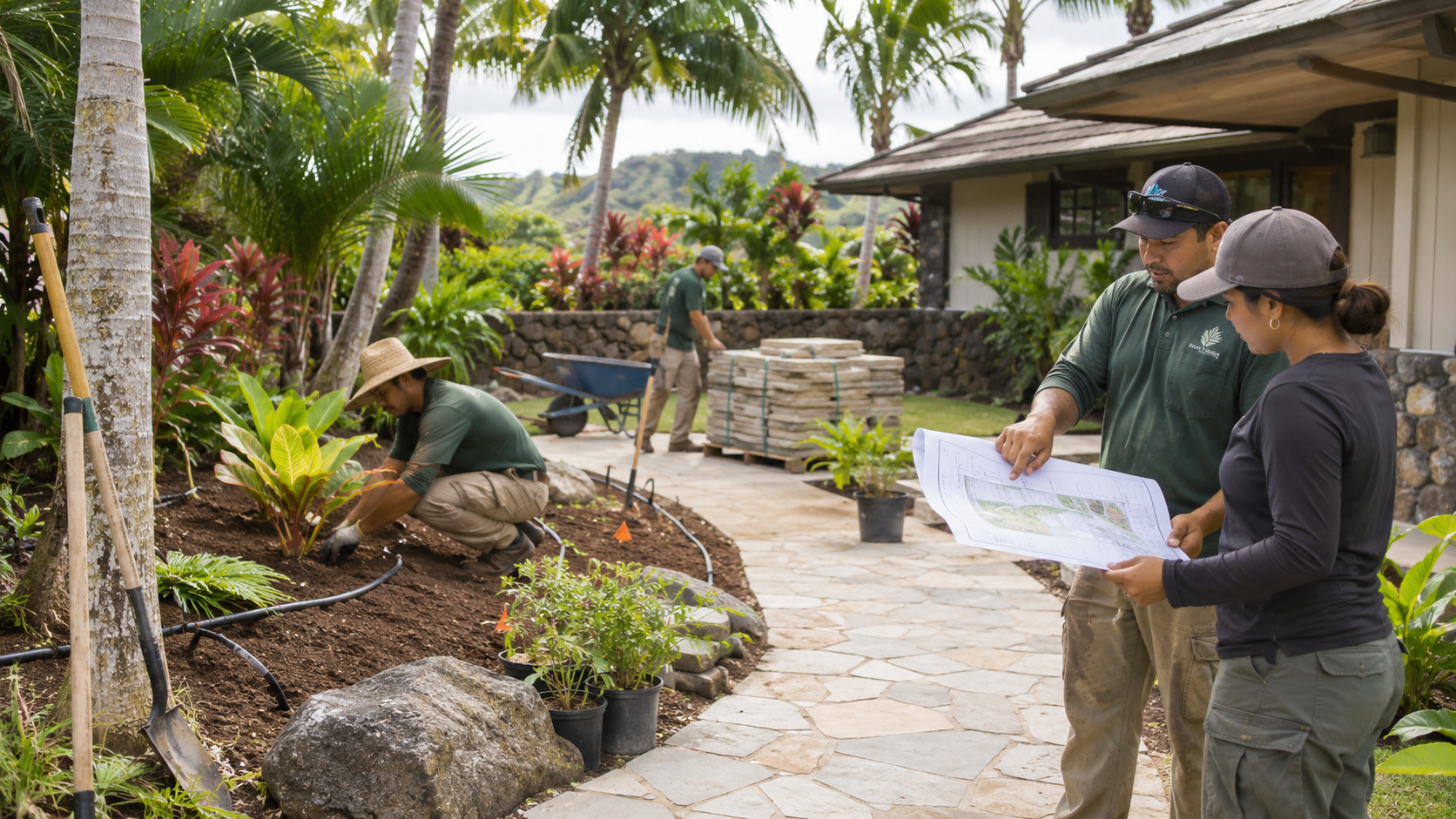
A landscape renovation can involve more than replacing plants or updating an outdoor space. Before installation begins, property owners may need to address irrigation problems, drainage concerns, underground utilities, and site access.
The order matters. Installing new planting beds before reviewing irrigation coverage, for example, can create additional work if the system needs to be changed afterward.
At Pacific Island Landscape, we provide residential and commercial landscape design and installation services across Oahu. We help clients define improvements around their property's conditions and intended use.
This guide explains how to organize a renovation project, from the initial site review to installation and long-term maintenance.
Step 1: Start With a Site Review
Before selecting new plants or materials, identify what the renovation needs to accomplish.
You may want to improve an entrance, reorganize outdoor spaces, replace declining landscaping, or update an irrigation system that no longer serves the property effectively.
A site review helps establish the work involved.
Important considerations include:
- Existing plant and tree conditions
- Irrigation coverage and visible leaks
- Drainage or water accumulation
- Terrain and access limitations
- Existing pathways and hardscape
- Areas requiring removal or site preparation
Oahu's climate also influences renovation planning. Salt exposure, rainfall, wind, and sunlight can vary substantially between locations.
For example, a coastal property may require different planting considerations from a protected inland landscape.
These conditions should inform the proposed design rather than being addressed only after installation.
Step 2: Identify Infrastructure Work Before Finalizing the Design
Infrastructure deserves attention early because irrigation, drainage, and underground utilities may affect where plants and hardscape can be installed.
Review irrigation requirements
Existing irrigation systems may not match a renovated landscape.
Removing turf, introducing new planting areas, or changing the layout can alter water distribution requirements.
Before approving the design, determine whether existing irrigation components can be retained or whether modifications should be included.
Our landscape installation services can incorporate irrigation improvements within the approved project scope.
Address drainage concerns
Water pooling near planting beds, runoff across walkways, or erosion on slopes can indicate drainage concerns that deserve further evaluation.
Landscape grading and drainage-related improvements may be considered during renovation planning. Structural engineering, foundation repairs, and engineered drainage systems require appropriately qualified professionals.
Significant site changes may also require permits.
The Honolulu Department of Planning and Permitting provides guidance on site development work, including grading and related permit requirements.
Locate underground utilities
Excavation for planting, irrigation, or landscape improvements can encounter buried utility lines.
Before digging, coordinate utility location through Hawaii 811. The service helps identify underground utility infrastructure that may be affected by excavation.
Private irrigation lines and other property-specific systems may require additional identification.
Addressing these issues during planning can reduce the need to disturb completed landscape work.
Step 3: Develop a Design That Fits the Property
Once site conditions and infrastructure needs are understood, the renovation design can take shape.
The layout should reflect how the outdoor space will be used, the property's architectural features, and the maintenance it will require.
Residential landscape renovations
Residential estates may need improvements to entrances, privacy planting, garden areas, or outdoor circulation.
Some projects focus on refreshing existing planting areas. Others involve new pathways, retaining features, irrigation improvements, or a more extensive redesign.
Our residential landscape design services can support the development of property-specific layouts and planting plans.
We can also collaborate with a client's landscape architect to carry an approved design into installation.
Commercial landscape renovations
Commercial properties often require additional coordination around access and daily operations.
An entrance renovation, for example, may affect pedestrian circulation, deliveries, and access to occupied areas.
Hotels and commercial developments may also need to consider guest-facing spaces and how construction activities interact with ongoing property operations.
Our commercial installation services support new developments and renovation projects, with work defined according to the approved scope.
Step 4: Confirm Plant Selection and Material Availability
Plants should be selected according to the intended design and the conditions where they will grow.
Oahu properties can differ in rainfall, coastal exposure, wind, and soil characteristics.
These conditions influence which plants are appropriate for a particular area.
The Rainfall Atlas of Hawaii provides useful regional rainfall information for understanding differences across the islands.
Plant size also matters. A species that fits a planting bed when young may eventually crowd nearby pathways or require frequent pruning.
At Pacific Island Landscape, our private nursery in Kapolei provides access to large-format plant material and specialty specimens.
Plant selection and availability are confirmed for individual projects rather than assumed in advance.
If a selected plant is unavailable, any proposed substitution should be reviewed before installation.
This is particularly important when working from an architect's approved design.
Step 5: Establish the Installation Sequence
Once the design and scope are approved, the next task is organizing installation.
The exact sequence depends on the property, but a renovation may follow this general order:
| Phase | Typical work |
|---|---|
| Site preparation | Approved vegetation removal, debris clearing, and access preparation |
| Site improvements | Applicable grading or drainage-related work |
| Irrigation | Installation or modification of irrigation components |
| Hardscape | Approved pathways, borders, and other landscape features |
| Lighting | Coordinated low-voltage lighting work, where included |
| Planting | Soil preparation and installation of selected plants |
| Finishing | Cleanup, final adjustments, and handoff |
Not every project includes each phase, and certain activities may overlap when appropriate.
For commercial properties, installation may also be organized around access requirements and operational constraints.
How long does landscape renovation take?
There is no universal installation timeline.
Project duration depends on the approved design, site conditions, material availability, permitting requirements, and extent of work.
A renovation involving planting-bed improvements may require a different schedule from one involving extensive hardscape and irrigation changes.
Ask your contractor to explain the proposed work sequence and identify dependencies that could affect scheduling.
Step 6: Review the Budget and Written Proposal
Landscape renovation costs on Oahu depend on the project's actual requirements.
Important budget considerations include site preparation, removal of existing materials, irrigation modifications, hardscape installation, plant selection, and site access.
Permits or work by specialized professionals may create additional costs when required.
Rather than comparing generic square-foot estimates, review the proposed scope and clarify what the quoted amount covers.
Before approving a renovation, make sure you understand:
- Which improvements are included
- What materials and plant selections are proposed
- Who is responsible for separately permitted or specialized work
- How removed landscape materials will be handled
- What requires additional authorization
- Whether ongoing maintenance is included or separately arranged
A written proposal helps connect the project's design objectives with the actual work to be performed.
Plan for Maintenance After Installation
Renovation planning should also consider what happens after the new landscape is installed.
New planting may need different attention from established vegetation, and irrigation settings may require adjustment as plants become established.
Routine pruning, irrigation inspections, and plant-health monitoring should reflect the completed landscape.
For clients needing ongoing care, we offer residential estate maintenance and commercial landscape maintenance through separately defined service scopes.
Planning for these responsibilities early helps property owners understand the ongoing care associated with their renovation choices.
Start Planning Your Oahu Landscape Renovation
A successful renovation begins with a clear understanding of the property and the work required before installation.
Reviewing site conditions, addressing infrastructure needs, and confirming materials before construction can help create a more organized project.
At Pacific Island Landscape, we provide landscape design and installation services for commercial properties and residential estates across Oahu.
To discuss your renovation goals, contact our team or call 808-347-4462 to request a property-specific consultation and estimate.