.svg)
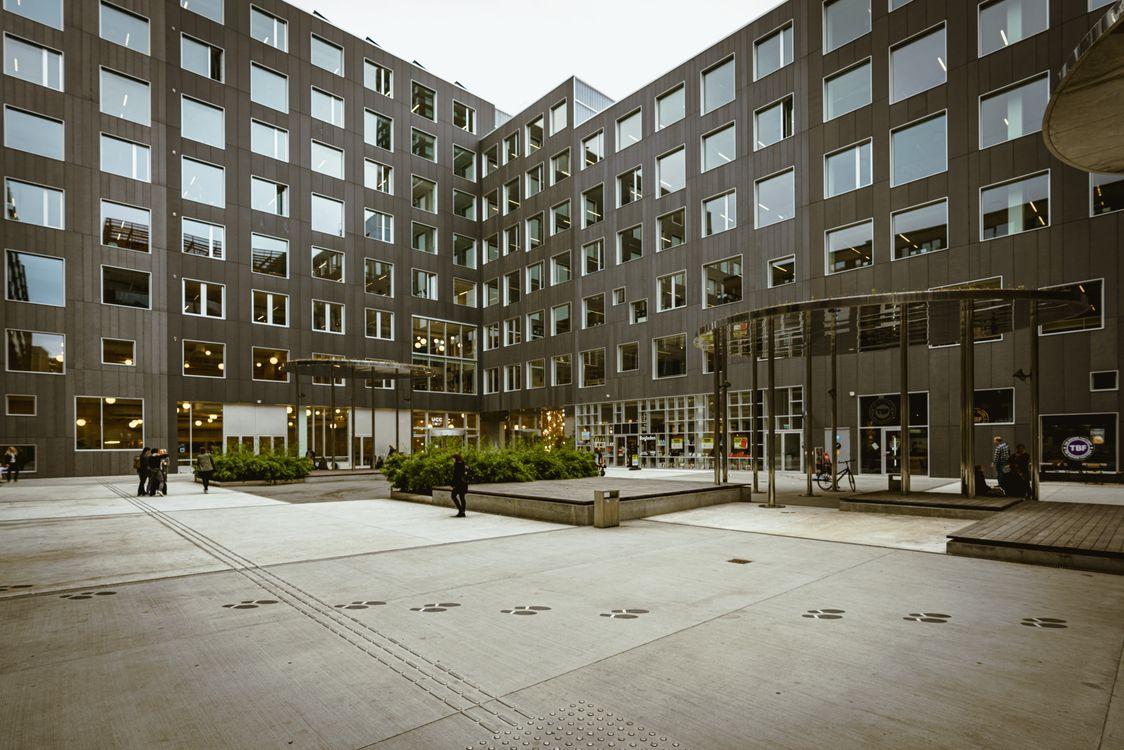
Weeds between pavers are easy to treat as a cosmetic problem. On a commercial plaza, they can also point to a maintenance condition. Joint material may be low. Irrigation may be reaching an area intended to stay dry.
At Pacific Island Landscape LLC, we believe paver weed control should start with the hardscape assembly rather than a blanket treatment. Interlocking pavers do not behave like poured concrete. Permeable pavement has different maintenance requirements. A method that removes visible growth may create another problem if it strips joint material or sends residue toward a drain.
Weed removal cannot restore settled pavement or repair a failed concrete joint. A documented maintenance plan can separate routine growth control from conditions that need hardscape repair.
Large plazas should be divided into inspection zones so recurring weed growth can be mapped accurately.
Read Weed Growth as Site Information
Weeds commonly germinate from seeds deposited in paver joints. The Concrete Masonry & Hardscapes Association maintenance guide notes that windblown seeds can lodge between pavers. That is different from assuming every weed grew upward through the entire pavement base.
The location of the growth matters. A few seedlings beside a planter may reflect ordinary seed movement. Repeated growth in a drainage path may indicate regular moisture and accumulated organic material. A long band of weeds beside a turf edge may point to lateral encroachment.
Commercial hardscape maintenance on Oahu should record these patterns before treatment. The record helps determine whether the issue belongs in recurring maintenance or corrective work.
| Field observation | What it may indicate | Appropriate next check |
|---|---|---|
| Scattered seedlings in otherwise full joints | Surface seed germination | Confirm removal method and monitor recurrence |
| Repeated growth beside an irrigated bed | Overspray or lateral plant movement | Observe the irrigation cycle and check edging |
| Vegetation in visibly low paver joints | Loss or displacement of joint material | Review the affected area before cleaning |
| Growth beside a sunken or rocking paver | Moisture and surface deformation | Refer the area for a repair assessment |
| Plants emerging from a concrete crack | An existing crack with accumulated growing material | Remove growth, then evaluate the crack separately |
These observations are not structural diagnoses. They are routing information for the property manager.
Identify the Hardscape Assembly Before Choosing a Method
A commercial plaza may contain several pavement types within one walking route. Interlocking concrete pavers use filled joints as part of the pavement system. Permeable interlocking pavement is designed around surface infiltration and open joints filled with compatible aggregate. Poured concrete uses control joints or expansion details that serve a different purpose.
The maintenance map should label each surface by type. Drain inlets need their own notation. Available construction records should preserve the specified joint material and manufacturer requirements.
Misidentifying the assembly can lead to the wrong response. Incompatible fill may interfere with permeable pavement. Treating a concrete crack as a normal paver joint does not address the crack.
Match the Control Method to the Condition
Paver weed control in Hawaii is not a single-product decision. The selected method should match the weed and surface type. Surrounding site use also matters. Tenant traffic affects scheduling.
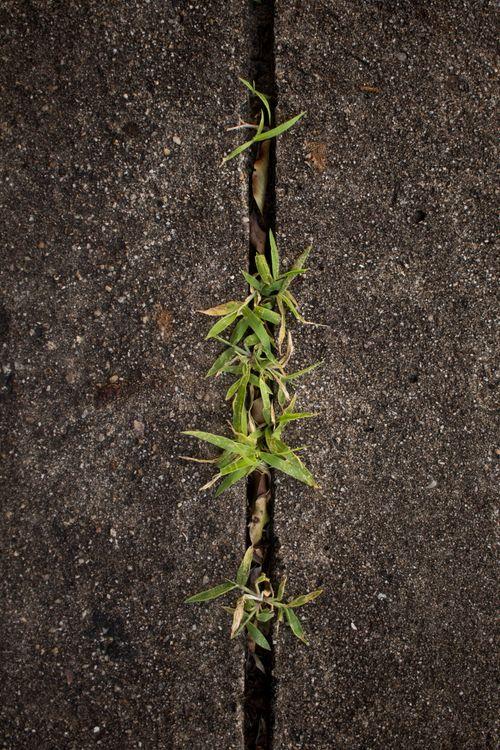
Vegetation in a concrete crack should be documented separately from growth in a designed paver joint.
| Method to evaluate | Best-fit condition | Main limitation |
|---|---|---|
| Hand removal | Isolated young growth in accessible joints | Roots may remain, and joint fill can be disturbed |
| Narrow mechanical tool | Defined cracks or joints where the tool will not damage the surface | Aggressive use can widen disturbance or remove fill |
| Commercial steam equipment | Certain young weeds where chemical use is not desired | Requires trained operation and burn controls |
| Labeled herbicide | A confirmed weed and permitted application site | Product label and site restrictions control use |
| Pressure washing | Cleaning only after surface compatibility is confirmed | High pressure may displace joint material or move debris |
The University of California Statewide Integrated Pest Management Program includes hand removal and steam among integrated weed-control options. Its guidance also warns that manual removal can disturb fill sand. Repeated aggressive scraping can affect many joints across a large plaza.
Protect Joint Material During Cleaning
Joint material is not decorative filler. In an interlocking paver system, it contributes to load transfer between units. A weed-control scope should therefore state what happens if removal exposes low joints.
Pressure washing deserves particular caution. A strong jet directed into the joint can remove sand. The surface may look clean while the joint is left lower than before. Equipment should be tested in a limited area. Runoff must be controlled for the site.
If joint replenishment is needed, the material should match the pavement design. Polymeric sand should not be specified automatically. The CMHA notes that joint-sand stabilization is optional for many interlocking concrete pavements. Permeable systems may require open-graded aggregate.
Sealing also belongs in a separate decision. Existing coating condition and surface compatibility should be evaluated before a sealer is proposed. Weed removal alone does not establish that sealing is required.
Correct the Moisture Pattern Where Practical
Recurring growth may have a water source. Irrigation overspray can wet the plaza edge. A leaking emitter may keep one joint band damp.
When feasible, inspection should occur while irrigation operates. Controller runtime should not be reduced only to suppress weeds because nearby plants may rely on the same zone. The irrigation problem should be diagnosed first.
Drainage observations require the same discipline. A puddle does not prove that a drain or base has failed. Persistent moisture or visible settlement should be referred for evaluation.
Routine sweeping can reduce material available for seeds. Debris should be collected rather than pushed into planter edges or drains.
Treat Concrete Cracks Separately From Paver Joints
Concrete flatwork contains planned joints, while uncontrolled cracks can develop for different reasons. Vegetation may establish wherever soil and moisture collect, but removing the plant does not repair the concrete.
The maintenance record should show crack location and approximate extent. Vertical displacement should be documented without declaring the cause. A property manager can then route the condition to a qualified concrete or pavement professional if repair review is needed.
This separation protects the maintenance budget. Routine paver weed control should not quietly absorb concrete repair responsibility. Corrective repair should also not be approved under a generic “weed treatment” description.
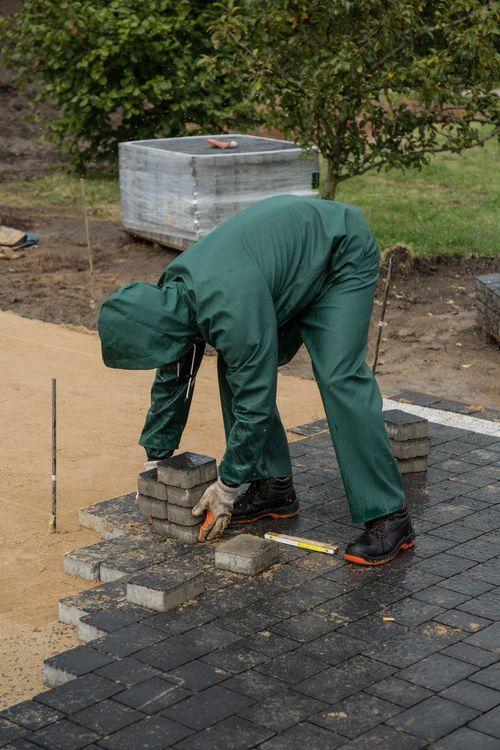
Settled or displaced pavers may require corrective hardscape work beyond routine weed removal.
Use Herbicides Only Within the Approved Scope
Chemical control should never be assumed from the phrase “weed-free.” If a herbicide is considered, the product must be labeled for the intended site and target. The application must follow its directions. The U.S. Environmental Protection Agency explains that pesticide labels are legally enforceable and define where a product may be used.
Commercial plazas add operational constraints. Treatment may need to avoid occupied entrances. Drift and runoff must be controlled according to the label. Required applicator qualifications should be confirmed.
The service record should identify the treated zone and application date. Pacific Island Landscape LLC does not recommend a treatment until the site condition and proposed scope have been reviewed.
Separate Recurring Maintenance From Capital Repair
Retail and office property managers need a budget structure that prevents cosmetic work from hiding repair conditions.
| Budget category | Typical work | Authorization approach |
|---|---|---|
| Recurring maintenance | Monitoring and approved weed removal | Include mapped zones and service frequency |
| Corrective maintenance | Joint replenishment or localized paver reset | Price after the affected area is evaluated |
| Capital repair | Broad settlement correction or concrete replacement | Use a defined repair design and separate approval |
After each service cycle, unresolved repair conditions should remain open until management approves or defers them. A photograph with a zone name is more useful than a general note that the plaza needs attention.
Discuss Commercial Hardscape Maintenance With Us
We provide commercial landscaping and maintenance for Oahu properties, including shopping centers and office buildings. Our live service information also includes softscape or hardscape design and debris removal. Specific paver weed control methods remain subject to site conditions and the approved scope.
Contact Pacific Island Landscape LLC to request an estimate. Identify the affected areas and any existing pavement specifications. We can review the requested work, then confirm what we can support without presenting weed removal as structural repair.

.svg)