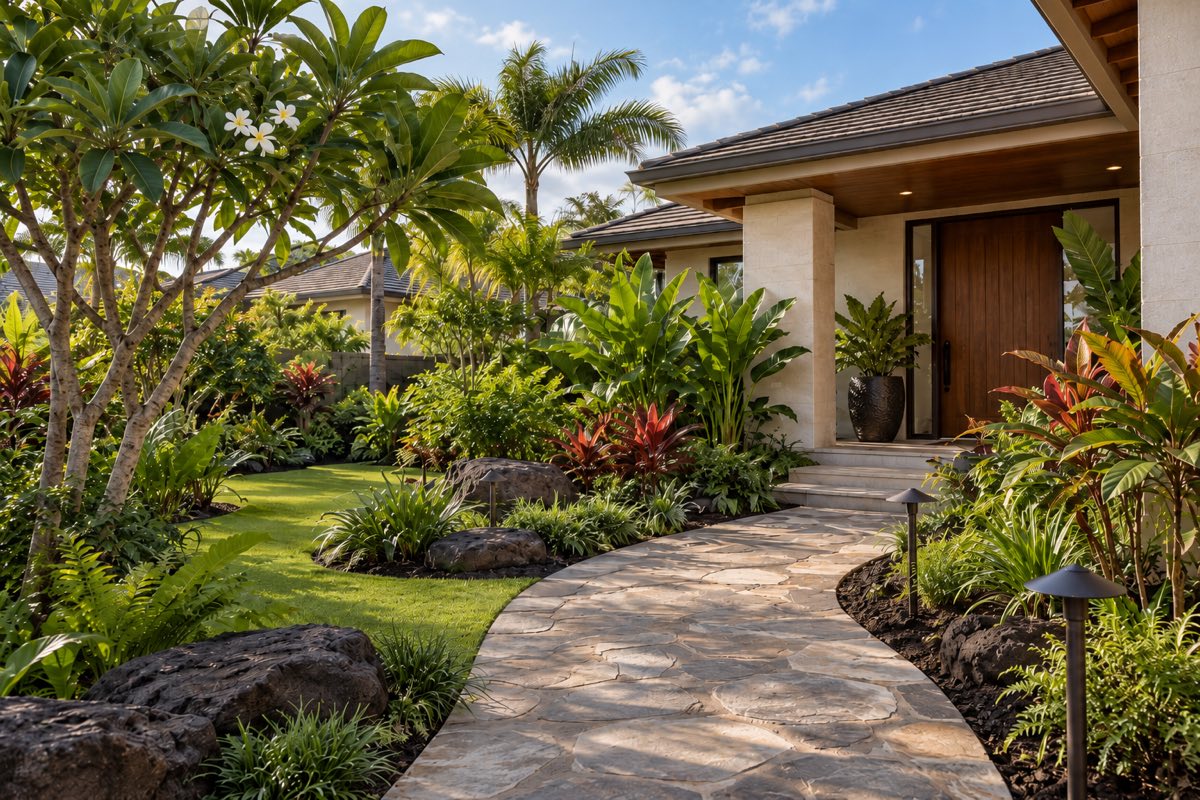
A landscape that looks beautiful in one Oahu neighborhood may struggle just a few miles away. A coastal property in Portlock faces different conditions from a sheltered Honolulu courtyard or a wind-exposed hillside in Hawaii Loa Ridge.
Salt spray, rainfall, soil drainage, and sun exposure all influence which plants belong on your property and how the landscape should be installed.
At Pacific Island Landscape, we plan residential landscapes around the conditions of each property rather than relying on a standard planting layout. Whether you're designing the grounds of a new home or updating an established estate, understanding your site's conditions and budget can help you make better decisions before installation begins.
Here's what to consider when planning residential landscape design on Oahu, from local growing conditions to project costs and choosing the right professional.
Why Residential Landscape Design on Oahu Requires Local Planning
Oahu's tropical climate supports a wide range of plants, but warm temperatures alone don't determine whether a landscape will thrive.
The Rainfall Atlas of Hawaii documents substantial rainfall differences across the islands, including short distances between coastal areas, valleys, and mountain slopes.
For residential properties, several conditions deserve attention before plants or materials are selected:
- Salt exposure: Coastal winds can carry salt onto foliage, affecting plants that aren't suited to exposed locations.
- Soil drainage: Compacted or poorly draining soil can leave roots saturated after heavy rain or irrigation.
- Wind exposure: Strong winds influence tree placement, plant selection, and the positioning of landscape features.
- Sun and shade: Buildings, walls, and existing trees create different growing conditions within the same yard.
- Irrigation requirements: Planting areas may need different watering schedules based on exposure and soil conditions.
The University of Hawaii's guidance on soil amendments and landscape plantings also explains how construction-related compaction can interfere with drainage and plant establishment.
We review these property conditions during our residential landscape design process. Identifying them early helps establish practical planting areas, irrigation layouts, and site preparation requirements.
Understanding Oahu's Landscaping Zones and Microclimates
The USDA Plant Hardiness Zone Map helps identify the average annual extreme minimum temperatures plants may encounter. However, temperature-based hardiness zones tell only part of the story for Oahu homeowners.
Rainfall, coastal exposure, terrain, and drainage often require closer attention.
Instead of choosing plants based on the island's general climate, consider how your specific neighborhood and property behave throughout the year.
Leeward Oahu: Ewa Beach, Kapolei, and Waipahu
Leeward properties commonly experience strong sun exposure and relatively dry conditions.
For homes in these areas, landscape planning may include:
- Plant selections suited to heat and prolonged sun exposure.
- Irrigation zones matched to the needs of different planting areas.
- Trees positioned to provide shade without conflicting with buildings or utilities.
- Soil preparation where construction activity has caused compaction.
Even in relatively dry neighborhoods, poor drainage can remain an issue. Soil conditions should be evaluated rather than assumed from the local climate.
Honolulu: Urban Lots, Valleys, and Hillsides
Honolulu properties vary considerably in their layout and exposure.
A narrow urban courtyard may have limited growing space and heavy shade, while a hillside property may require additional attention to runoff and accessible planting areas.
For these homes, residential landscape design often involves balancing outdoor functionality with site limitations.
We consider how people move through the property, where planting areas can be established, and how irrigation or landscape drainage should be coordinated with existing features.
Coastal and Ridge Properties: Portlock, Lanikai, and Hawaii Loa Ridge
Coastal landscapes require careful consideration of salt exposure and wind direction. Ridge properties can introduce additional challenges involving slopes, exposed planting areas, and maintenance access.
For these properties, plant placement needs to account for the surrounding environment rather than appearance alone.
Our Oahu residential work includes coastal and ridge-line estate environments where microclimate planning is an important part of landscape installation.
Projects involving structural retaining walls, engineered drainage, or other regulated design work may also require appropriately licensed professionals outside the landscaping scope.
How Much Does Residential Landscape Design Cost in Hawaii?
There isn't one reliable landscaping cost per square foot that applies to every Oahu residential property.
A small planting refresh, an estate renovation, and a new-home landscape installation can have substantially different requirements.
The most useful starting point is a property-specific scope, not a general national pricing estimate.
Several factors influence residential landscaping costs in Hawaii.
| Cost factor | What affects your project |
|---|---|
| Property size and layout | Total installation area, slopes, and site access |
| Site preparation | Vegetation clearing, soil preparation, grading, and drainage considerations |
| Plant selection | Specimen size, nursery availability, and transportation |
| Irrigation | Existing system condition, additional zones, and required modifications |
| Hardscaping | Pathways, stonework, retaining walls, and material choices |
| Landscape lighting | Fixture selection, cable routes, and existing system limitations |
| Waste removal | Approved green waste, soil, sod, and other landscape material requiring disposal |
How to Build a Practical Landscaping Budget
Start by separating essential site work from optional improvements.
For example, a property with drainage concerns may need those conditions addressed before decorative planting beds are installed. Irrigation planning should also be coordinated with the planting layout before the landscape is finished.
If the project will be completed in phases, consider this sequence:
- Site assessment and design: Establish the layout, property limitations, planting areas, and overall scope.
- Groundwork and infrastructure: Coordinate approved grading, landscape drainage, and irrigation requirements.
- Planting and hardscaping: Install approved plant material, pathways, and other landscape features.
- Lighting and finishing details: Add landscape lighting and decorative elements where included in the plan.
- Ongoing maintenance: Define how irrigation, pruning, and plant care will be managed after installation.
The order may change depending on the property and approved design, but planning the phases together can help reduce conflicts between installations.
At Pacific Island Landscape, we review the requested work and provide written proposals identifying included services and exclusions. Pricing is established after the property's requirements have been evaluated.
Homeowners can request a landscape quote to begin that discussion.
Landscape Designer, Landscape Architect, or Design-Build Contractor?
Choosing the right professional depends on your project's complexity and the type of work involved.
These roles may overlap, but they are not interchangeable.
| Professional | Typical role | When to consider one |
|---|---|---|
| Landscape designer | Develops planting concepts, spatial layouts, and outdoor design plans | Planting improvements, garden layouts, and residential landscape concepts |
| Licensed landscape architect | Provides professional landscape architectural services within the applicable licensing requirements | Projects requiring licensed professional design services |
| Landscape contractor or design-build provider | Coordinates approved landscape design and physical installation within the authorized scope | Homeowners seeking connected design, installation, and maintenance services |
Hawaii regulates landscape architecture as a licensed profession. Homeowners can use the Hawaii DCCA licensing resources to review applicable professional licensing requirements.
For projects involving structural engineering, significant retaining-wall requirements, or engineered stormwater systems, additional qualified professionals may be necessary.
How We Approach Residential Landscape Design
We provide in-house residential landscape design and also work as a build partner for homeowners who already have a landscape architect.
Our process can include:
- Initial site consultation: Reviewing the property's layout, exposure, access, and homeowner priorities.
- Design coordination: Developing planting areas, hardscape layouts, and applicable irrigation or low-voltage lighting plans.
- Botanical sourcing: Reviewing suitable plant material and checking availability through our private nursery.
- Final scope and installation planning: Coordinating approved design details with the work required to implement them.
Because we also provide residential installation and ongoing landscape maintenance, homeowners can discuss how their landscape will be installed and cared for as part of the planning process.
Choosing Plants and Features That Fit Your Property
An effective landscape design should reflect how you intend to use the outdoor space.
For some homeowners, that means privacy planting along a property boundary. Others may prioritize shaded seating areas, clearer walkways, or planting beds that complement the home's architecture.
Plant size deserves particular attention.
A mature tree or established hedge may create a different visual effect from a smaller plant, but larger material also introduces considerations involving root space, transportation, access, and installation.
Our private landscape nursery in Kapolei grows large-format trees, privacy hedging, and specialty botanical material for our projects. Homeowners and their architects can arrange visits to review suitable specimens, subject to current inventory and project requirements.
Lighting is another detail worth planning before planting is complete.
Our residential low-voltage lighting services can be coordinated with landscape layouts to illuminate walkways, elevation changes, and selected planting features. Cable routing and equipment requirements should be considered before the surrounding landscape is finished.
Planning for Long-Term Landscape Maintenance
A successful installation is only the beginning of managing a residential landscape.
Plants mature, hedges require pruning, and irrigation systems may need adjustment as conditions change.
Before approving a design, consider:
- Whether mature trees will have adequate growing space.
- How maintenance crews will access planting beds and hedges.
- Whether irrigation zones can be inspected and adjusted.
- How fallen branches, palm fronds, and other landscape debris will be handled.
- Whether the selected plants suit the level of maintenance you want.
Plant health also deserves attention, particularly where palms and other susceptible plants form part of the design.
The coconut rhinoceros beetle is an established concern on Oahu. Palm selection and placement should account for inspection access and ongoing plant-health monitoring. Treatment may be appropriate following an evaluation, but it does not eliminate the risk of infestation or assure a palm's recovery.
We offer residential maintenance and separately scoped plant disease control and coconut rhinoceros beetle treatment where appropriate.
Planning for these responsibilities early makes it easier to understand what the finished landscape will require.
What to Ask Before Hiring an Oahu Landscape Contractor
A landscape proposal should explain more than the plants and materials being installed.
Before choosing a contractor, ask:
- What is included in the written scope? Confirm whether site preparation, irrigation, planting, disposal, and cleanup are covered.
- How will site conditions be evaluated? Discuss drainage, sun exposure, salt, and any known soil concerns.
- Who handles specialized design work? Clarify when an architect, engineer, or other licensed professional is required.
- How will plant availability be confirmed? Understand whether substitutions require your approval.
- What happens after installation? Ask whether ongoing maintenance is included or requires a separate agreement.
It is also reasonable to verify contractor licensing and relevant insurance information before work begins.
The Hawaii DCCA contractor guidance explains how homeowners can check licensing information and research contractors.
A clearly defined scope helps you compare proposals based on the actual work being offered rather than price alone.
Plan Your Oahu Residential Landscape With Confidence
Residential landscape design on Oahu starts with understanding the property itself.
The right planting layout depends on exposure, soil conditions, water requirements, and how you want to use the space. A practical budget also needs to account for site preparation and long-term maintenance, not just the finished appearance.
We work with Oahu homeowners, estate managers, and architects to develop landscape designs and installation scopes suited to their properties.
Whether you're planning the grounds of a new home or renovating an established residential landscape, we can review your project requirements and discuss the appropriate next steps.
Ready to discuss your landscape design?
Request a Residential Landscape Consultation or call 808-347-4462 to arrange a property review.
Pacific Island Landscape | Hawaii Contractor License CT-35972